







What's Happening?
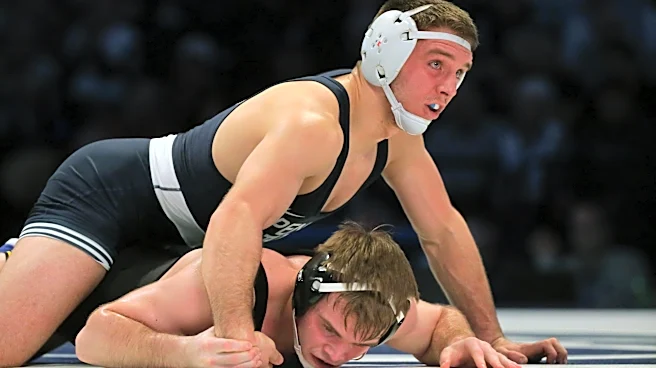
The latest national high school boys wrestling rankings, version 8, have been released with significant adjustments ahead of the 2026-27 season. Key changes include new No. 1 wrestlers in the 120, 175, and 190-pound weight classes. A major policy shift
for the upcoming season is the implementation of a 'one entry per team at each weight' rule. This means that if a team has multiple nationally ranked wrestlers in the same weight class, only the highest-ranked individual will be listed, with others potentially moved to a plausible higher weight class if they have competed there previously. Wrestlers from Valiant Prep, homeschooled athletes, and those who have enrolled in college early will be removed from the rankings as the high school season officially begins. The rankings also reflect recent performances from events like Super 32 and the U.S. Marine Corps’ Brian Keck Preseason Nationals, which primarily impacted the lower half of the rankings. Specific reevaluations occurred at 120 pounds, leading to Brayden Wenrich of Northampton, PA, taking the top spot. Jayden O’Farrill of State College, PA, moved from 175 to 190 pounds, securing the No. 1 ranking in the latter, which resulted in Zack Aquila of Brecksville, OH, becoming the top-ranked wrestler at 175 pounds.
Why It's Important?
These updated rankings are crucial for high school wrestling programs, athletes, and college recruiters across the U.S. The 'one entry per team' rule will significantly impact how powerhouse teams like Lake Highland Prep (Florida), Blair Academy (New Jersey), and Wyoming Seminary (Pennsylvania) are represented, as they are noted for having multiple nationally ranked talents who may now be benched or shifted. This change could lead to more diverse representation in the rankings and potentially alter team strategies for dual meets and tournaments. For individual athletes, a higher ranking can increase visibility for college scholarships and national recognition. The removal of non-traditional competitors (Valiant Prep, homeschooled, early college enrollees) reinforces the focus on athletes actively participating in the standard high school wrestling season, ensuring the rankings accurately reflect the competitive landscape within that specific structure. The shifts in top spots at various weight classes also signal emerging talents and changes in the competitive hierarchy, influencing expectations for the upcoming season's major tournaments and state championships.
What's Next?
The next major update to the national high school boys wrestling rankings is anticipated around Thanksgiving, coinciding with the start of the wrestling season for many states. This update will incorporate early-season results and further solidify the competitive landscape under the new ranking rules. Wrestlers and coaches will be strategizing based on these initial rankings, potentially adjusting weight classes or competition schedules to maximize individual and team performance. The new 'one entry per team' rule will likely lead to internal team discussions and decisions regarding which athletes will compete at specific weights, especially for teams with deep rosters. College recruiters will closely monitor these early-season performances and subsequent ranking updates to identify top prospects. As the season progresses, major tournaments will provide critical data points for future ranking adjustments, and the performance of newly top-ranked wrestlers like Brayden Wenrich, Jayden O’Farrill, and Zack Aquila will be under scrutiny to see if they can maintain their positions.
Beyond the Headlines
The new ranking methodology, particularly the 'one entry per team' rule, could spark broader discussions within the high school wrestling community about fairness, team dynamics, and individual opportunity. While it aims to prevent a single team from dominating multiple spots in a weight class, it might also lead to talented athletes being overlooked if they are on a team with a slightly higher-ranked teammate. This could prompt some athletes to consider transferring schools or adjusting their weight classes more drastically to gain national recognition. The emphasis on traditional high school enrollment also highlights a broader trend in sports to define and regulate participation criteria, potentially impacting alternative athletic development pathways. Furthermore, the detailed analysis of past performances alongside current results underscores the importance of consistent performance throughout an athlete's career, not just standout moments. This holistic approach to ranking could influence how young wrestlers approach their training and competition schedules from an early age, aiming for sustained excellence rather than sporadic victories.