





What's Happening?
Latinx artists are increasingly challenging traditional aesthetic repertoires and mainstream assimilationist models by drawing directly from their communities, vernacular traditions, oral histories, and family memories. This movement is evident across
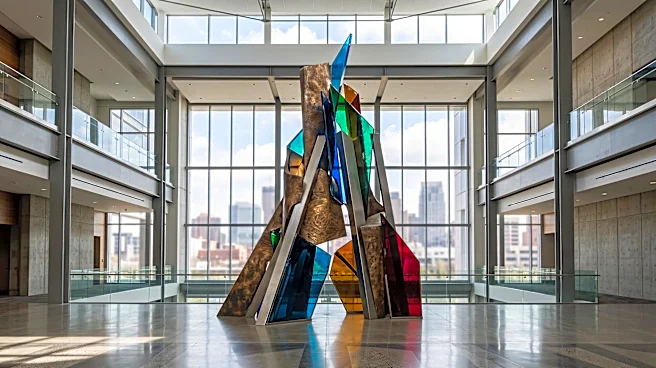
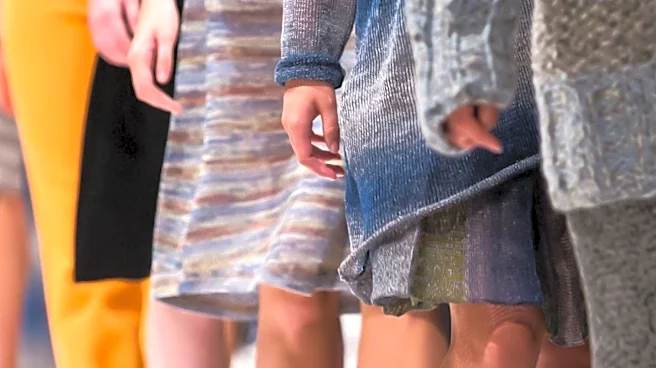
various creative fields, including fashion, public art, and independent filmmaking. Designers like Raul Lopez (Luar) and Willy Chavarria are incorporating working-class aesthetics, immigrant youth experiences, and urban street culture into contemporary fashion, often using street-cast Black and Brown models. In public art, artists are Latinizing cityscapes by highlighting Afro-Indigenous heritage and the multicultural history of cities, as seen in works by Melissa Calderón and Maria Magdalena Campos Pons. Filmmakers are also contributing to this shift, though they often face marginalization and a lack of mainstream opportunities. This collective effort aims to reclaim heritage, reframe narratives, and assert the value and complexity of Latinx identities in the face of societal challenges.
Why It's Important?
This artistic movement is significant because it directly confronts historical marginalization and offers a powerful counter-narrative to the often-polarized and distorted representations of Latinx communities in public discourse. By centering their own stories and cultural legacies, these artists are fostering empowerment and continuity within their communities. Their work challenges the notion that conforming to mainstream models is the only path to success, instead demonstrating the richness and value of diverse cultural expressions. This shift has broader implications for society by promoting inclusivity and expanding aesthetic understanding beyond Eurocentric perspectives. It also highlights the resilience of Latinx communities and the role of art as a tool for social commentary and resistance against dehumanization, particularly in the context of rapid technological advancements and economic pressures.
What's Next?
The continued growth of this movement suggests a future where Latinx art and culture will increasingly influence mainstream creative industries, pushing for greater representation and recognition. As artists continue to create work deeply rooted in their communities, there is potential for more widespread adoption and appreciation of these diverse narratives. This could lead to increased opportunities for Latinx artists in film, fashion, and public art, potentially breaking down existing barriers to commercial and institutional rewards. Furthermore, the emphasis on community-sourced archives and local histories indicates a growing trend towards decentralized cultural preservation, empowering individuals to document and share their own heritage. This ongoing artistic activism is likely to inspire future generations, providing models of resistance and fostering imaginations free from imposed narratives.
Beyond the Headlines
Beyond the immediate artistic output, this movement signifies a deeper cultural and political reassertion. It challenges the very foundations of what is considered valuable and fashionable within creative industries, pushing for a re-evaluation of traditional hierarchies. Ethically, it underscores the importance of crediting sources of inspiration and acknowledging the cultural origins of artistic expressions, moving away from appropriation. Legally, the emphasis on community archives and the defense of local histories, as seen in the Rio Grande Valley, could influence discussions around cultural heritage protection and land rights. Culturally, it fosters a more nuanced understanding of American identity, recognizing the integral contributions of Latinx communities. This long-term shift could lead to a more equitable and representative cultural landscape, where diverse voices are not just tolerated but celebrated as essential to the national narrative.