





What's Happening?
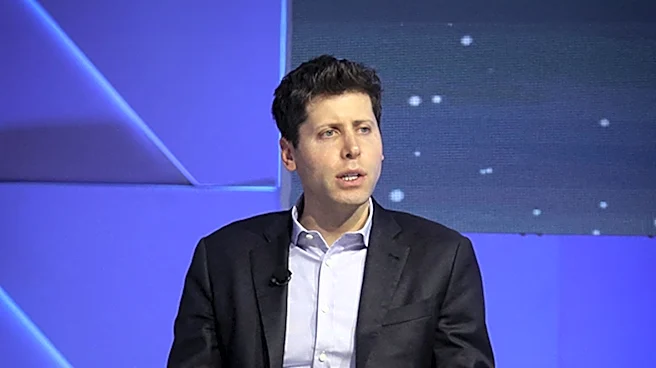
Sam Altman, CEO of OpenAI, has raised concerns about the potential cognitive atrophy caused by over-reliance on artificial intelligence. He suggests that as AI takes over more cognitive tasks, individuals may become less inclined to engage in critical
thinking, leading to weakened mental faculties. This concern is echoed by researchers who warn that AI could diminish job and cognitive skills, as people rely on technology to perform tasks traditionally requiring human thought. The discussion highlights the need to balance AI use with activities that stimulate cognitive engagement.
Why It's Important?
The potential cognitive atrophy associated with AI use could have widespread implications for the workforce and education systems. As AI tools become more prevalent in various industries, there is a risk that workers may lose essential skills, impacting job performance and career development. This could lead to a workforce less capable of critical thinking and problem-solving, skills that are crucial in a rapidly changing job market. Educational institutions may need to adapt curricula to emphasize cognitive skills and critical thinking to prepare students for a future where AI is ubiquitous.
What's Next?
To mitigate the risk of cognitive atrophy, there may be a push for educational and professional development programs that emphasize critical thinking and cognitive engagement. Companies might also need to implement strategies to ensure employees maintain and develop cognitive skills alongside AI tools. Policymakers could consider regulations to balance AI integration with human skill development, ensuring that technology enhances rather than diminishes human capabilities.