






What's Happening?
Werner Enterprises CEO Derek Leathers has indicated that significant capacity cuts are underway in the trucking industry, estimating that 3-4% of trucking capacity has already exited the market. He also noted that approximately 15% of capacity was operating
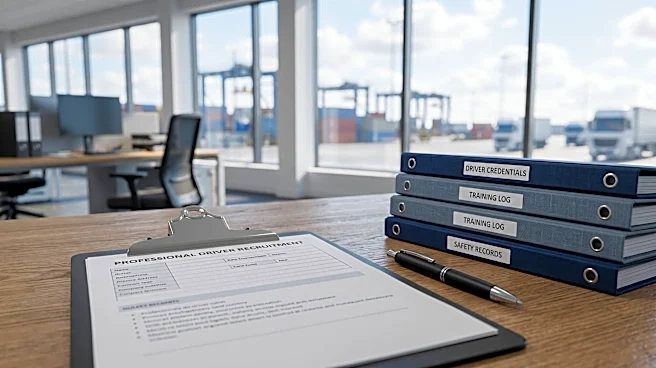
outside current regulations. Leathers highlighted an expansion of enforcement efforts beyond drivers to include CDL schools, license issuance, and B-1 visa cabotage violations, with the latter being a relatively new focus. Industry data cited by Leathers reveals a 170% increase in driver application rejection rates since January and a 20-30% decline in trucking school enrollment. These factors, combined with higher insurance costs, stricter carrier vetting, and increased litigation risks, are making it more challenging for new operators to enter the market. Leathers anticipates further capacity reductions and a subsequent rise in freight rates through the end of the year.
Why It's Important?
The insights from Werner Enterprises CEO Derek Leathers underscore a critical shift in the U.S. trucking industry, with significant implications for supply chains and the broader economy. The ongoing reduction in trucking capacity, driven by stricter enforcement, rising operational costs, and a shrinking pool of new drivers, is likely to lead to increased freight rates. This will directly impact businesses that rely on trucking for their logistics, potentially leading to higher costs for consumers. The expanded enforcement against regulatory non-compliance, including B-1 visa cabotage violations, suggests a concerted effort to professionalize the industry and eliminate illicit practices. While this may create a more level playing field for compliant operators, it also contributes to the overall reduction in available capacity. The challenges faced by new operators in entering the market could exacerbate the driver shortage, making it harder for the industry to scale up quickly in response to demand fluctuations.
What's Next?
The trucking industry is expected to experience continued capacity reductions and rising freight rates through the end of the year, according to Werner Enterprises CEO Derek Leathers. This trend will likely lead to increased costs for businesses that depend on freight transportation, potentially impacting consumer prices. The expanded enforcement of regulations, particularly concerning CDL schools, license issuance, and B-1 visa cabotage violations, suggests a sustained effort to improve compliance and safety within the sector. Compliant and structurally sound operators are poised to benefit from these market corrections as 'cheap capacity' diminishes. Businesses and consumers should anticipate a tighter freight market, which could necessitate adjustments in logistics planning and budgeting. The long-term implications include a potentially more stable and regulated trucking industry, but also one with higher barriers to entry and potentially higher operating costs.