



What's Happening?
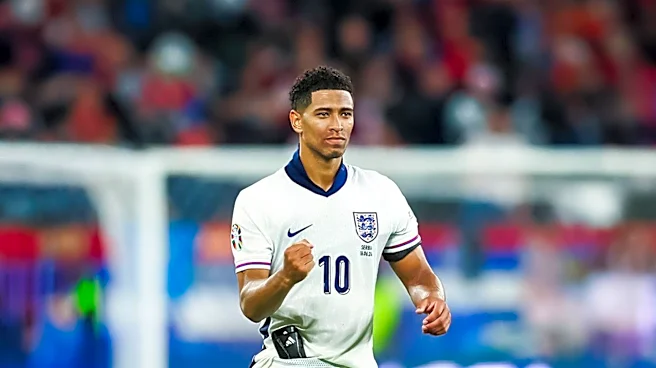
In a recent match against Panama, England's Jude Bellingham was pivotal in a tactical shift necessitated by the absence of Declan Rice. Bellingham was deployed in a box-to-box role, contributing significantly to England's strategy of building play from
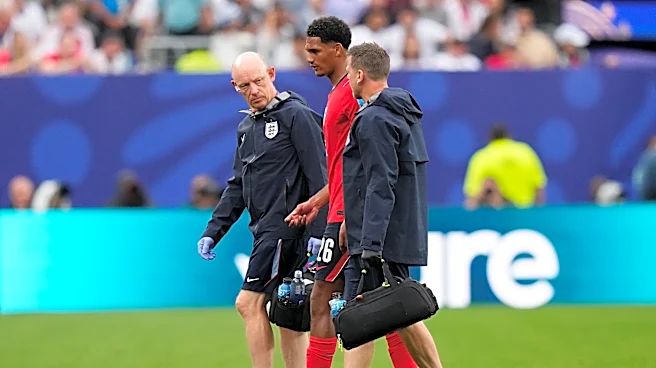
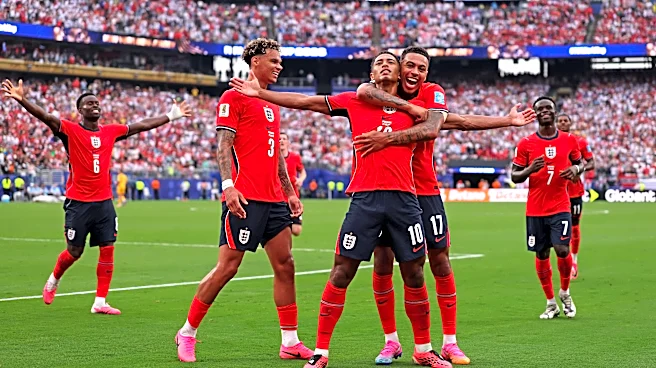
the back. The team adjusted its formation, with Jarell Quansah stepping in for the injured Reece James, forming a back three with Marc Guehi and Ezri Konsa. This allowed Bellingham to support Elliot Anderson in midfield, facilitating a dynamic 3-2-5 or 3-1-6 formation depending on the game's flow. Bellingham's ability to drop deep and create space was crucial, directing play and enabling effective vertical passes, which were instrumental in England's 2-0 victory.
Why It's Important?
Bellingham's performance highlights his versatility and tactical intelligence, which are vital for England's adaptability in international competitions. His role in the match against Panama underscores the importance of having players who can seamlessly transition between defensive and offensive duties. This flexibility is crucial for England as they navigate injuries and tactical challenges in tournaments. Bellingham's ability to influence the game from midfield not only strengthens England's squad depth but also sets a precedent for future strategic adjustments, potentially influencing how other teams prepare to face England.
What's Next?
England's tactical adjustments, with Bellingham at the core, suggest a potential shift in strategy for upcoming matches. As the team continues in the tournament, further adaptations may be necessary, especially if injuries persist. Bellingham's role could expand, requiring him to take on more leadership responsibilities in midfield. Opposing teams may need to develop counter-strategies to mitigate his impact, potentially leading to more dynamic and unpredictable matches. England's coaching staff will likely continue to refine their approach, leveraging Bellingham's strengths to maintain competitive advantage.