






What's Happening?
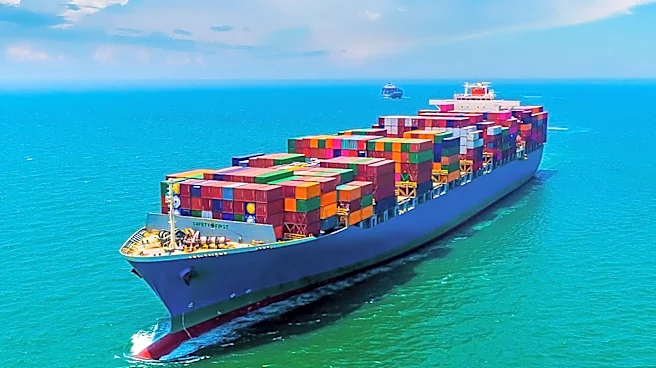
The container ship RMS ROSE, operated by Flexport, is currently sailing under the Barbados flag. Built in 2005, the vessel has a length overall (LOA) of 139 meters, a deadweight tonnage (DWT) of 11,050 tons, a gross tonnage (GT) of 9,701, and a capacity
of 956 TEU (twenty-foot equivalent units). Flexport Atlas, a platform for tracking vessel information, provides details on its current position, estimated time of arrival (ETA), recent port calls, and ocean schedules. As of November 29, 2026, at 20:29 UTC, the RMS ROSE was reported to be operating on the routes AKNX:WMS 1026E and AKNX:WMS 1026W. Flexport, a freight forwarding and supply chain platform, utilizes such vessels as part of its global logistics operations, managing over $19 billion in merchandise across 112 countries annually.
Why It's Important?
The continued operation of vessels like the RMS ROSE under the Barbados flag highlights the global nature of maritime shipping and the complex network of international regulations and logistics that underpin global trade. For U.S. businesses and consumers, the efficiency and reliability of such shipping operations are crucial for the timely delivery of imported goods and the export of American products. Flexport's role in managing these supply chains, including freight forwarding and customs brokerage, directly impacts the cost and speed of international trade. The use of a foreign flag, while common in the shipping industry, can also have implications for labor laws, environmental regulations, and international jurisdiction, which indirectly affect the competitive landscape for U.S. shipping companies and the overall U.S. economy.
What's Next?
The RMS ROSE will continue its scheduled operations on its designated routes, contributing to Flexport's broader supply chain management activities. Flexport will likely continue to leverage its AI-powered platform to optimize the movement of goods, including those transported by vessels like the RMS ROSE. The company's ongoing efforts in freight forwarding, customs brokerage, and logistics software will aim to enhance efficiency and reduce costs in global shipping. Future developments in international trade policies, fuel prices, and maritime regulations could influence the operational strategies for vessels under foreign flags and the overall profitability of supply chain platforms like Flexport.
Beyond the Headlines
The operation of the RMS ROSE under the Barbados flag is indicative of a broader trend in the global shipping industry where vessels are often registered in countries with favorable tax regimes, less stringent regulations, or lower operating costs. This practice, known as 'flags of convenience,' allows shipping companies to optimize their operational expenses and navigate complex international maritime laws. While economically beneficial for operators, it can raise questions about accountability, labor standards, and environmental compliance, particularly when incidents occur. For the U.S., understanding these dynamics is essential for developing effective trade policies, ensuring fair competition, and addressing potential environmental or labor concerns associated with the global supply chains that serve its economy.