



What's Happening?
Data center developers are increasingly facing power availability constraints, leading to a growing need for 'bring your own energy' (BYOE) solutions. This shift necessitates significant capital investment, making early and comprehensive tax planning
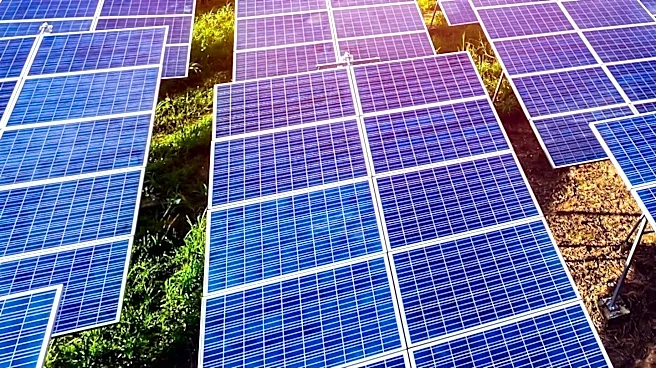
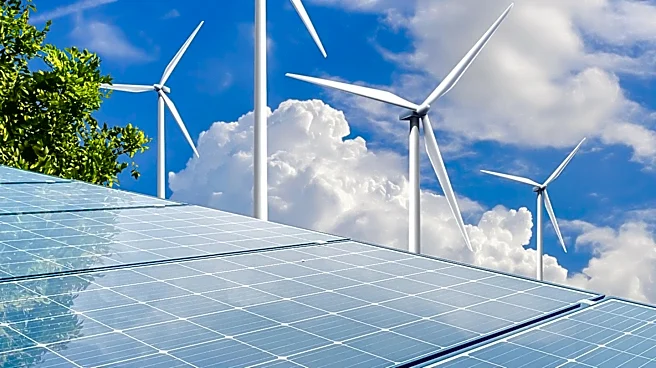
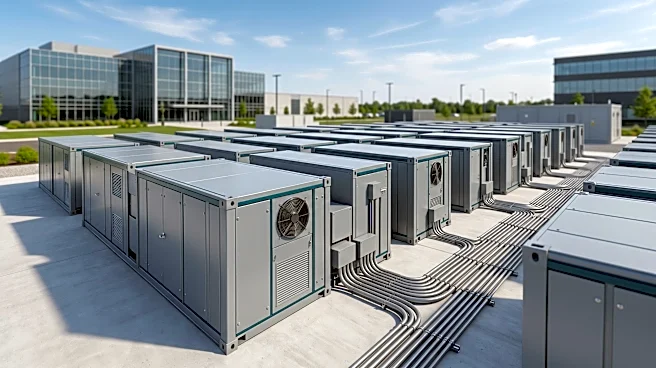
crucial to optimize project economics. Section 48E, the clean electricity investment credit, offers a substantial opportunity for developers to offset upfront BYOE costs, potentially providing a federal tax credit of 30% to 50% or more for eligible investments in qualifying energy storage and clean electricity generation. Battery energy storage equipment is highlighted as a universally applicable opportunity for data centers to claim Section 48E credits, even when drawing electricity from the grid. Additionally, power-generating equipment in BYOE projects may qualify if it results in net-zero greenhouse gas emissions, including technologies like solar, wind, nuclear, geothermal, and hydropower. Maximizing these credits depends on factors such as technology selection, construction dates, eligible tax basis, and compliance with labor requirements like prevailing-wage and apprenticeship standards.
Why It's Important?
The increasing demand for data centers, coupled with power grid limitations, is driving a fundamental change in how these facilities are developed and powered. This shift towards BYOE models means that energy decisions are no longer just operational or engineering challenges but critical tax planning issues. By integrating tax planning early in the design and procurement phases, developers can significantly improve cash flow, enhance project returns, and avoid missed opportunities for substantial tax savings. The availability of federal tax credits like Section 48E can make otherwise expensive BYOE projects economically viable, encouraging investment in clean energy technologies. This proactive approach to tax strategy can differentiate successful projects by optimizing financial outcomes and ensuring compliance with evolving energy and labor requirements, ultimately impacting the cost and feasibility of data center expansion across the U.S.
What's Next?
Developers are advised to involve tax advisers early in the project lifecycle, ideally before construction begins, to maximize available incentives and minimize compliance risks. Key considerations include determining asset ownership, identifying Section 48E qualifying technologies, ensuring compliance with labor and sourcing requirements, and evaluating eligibility for accelerated depreciation and state and local incentives. Decisions made during project design, procurement, contracting, and ownership structuring will directly impact eligibility for various tax benefits. Failure to integrate tax planning into these early stages can lead to significant missed opportunities and potential 'buyer’s remorse.' The ongoing evolution of energy regulations and tax incentives will require continuous monitoring and adaptation from data center developers to maintain competitive advantage and financial efficiency.
Beyond the Headlines
The move towards BYOE in data centers underscores a broader trend of decentralization in energy infrastructure, driven by both technological advancements and environmental concerns. This shift has profound implications for grid stability, energy independence, and the adoption of renewable energy sources on a larger scale. The emphasis on tax incentives for clean energy investments reflects a policy push towards decarbonization within the industrial sector, potentially accelerating the transition away from fossil fuels. Furthermore, the requirement for labor compliance, such as prevailing-wage and apprenticeship standards, ties economic development to social equity, ensuring that the benefits of these investments are shared more broadly. This integrated approach to energy, tax, and labor policy could serve as a model for other industries facing similar infrastructure and sustainability challenges, fostering a more resilient and equitable energy future.