


What's Happening?
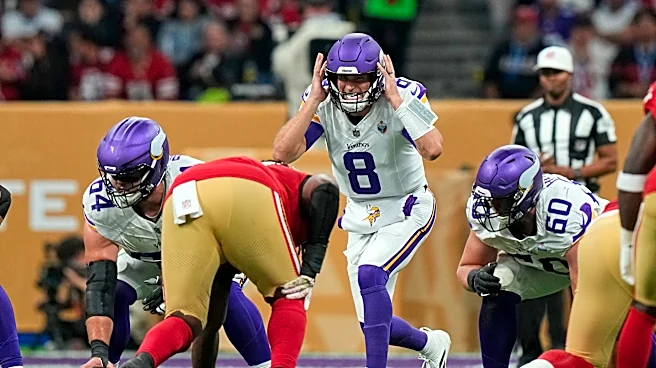
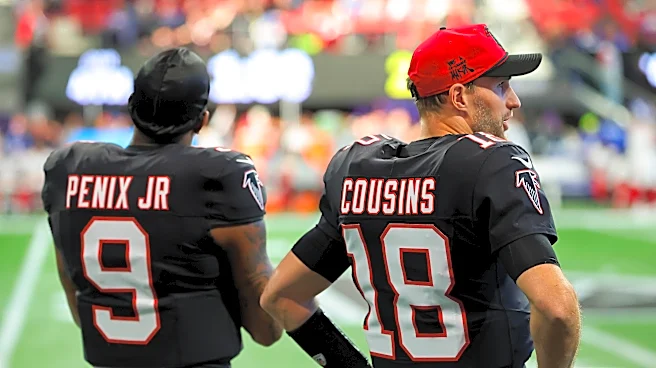
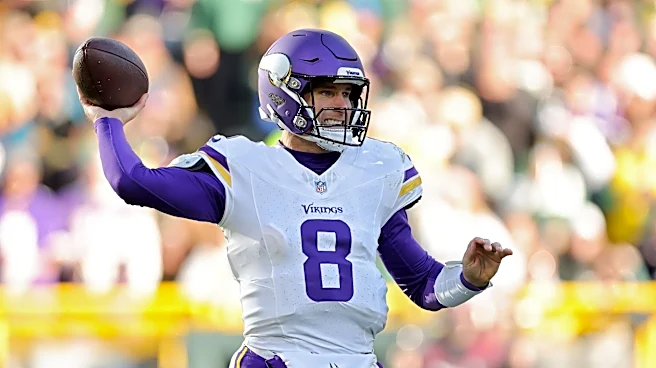
The Minnesota Vikings' decision to trade for quarterback Kirk Cousins mid-season, following a period of inconsistent leadership at the position, is being used as a case study for business leaders. The team experienced a rotation of quarterbacks after
Kirk Cousins' injury in October 2023, leading to uncertainty on the field. This situation culminated in a poor performance by Carson Wentz, prompting the Vikings to reacquire Cousins from the Las Vegas Raiders within 24 hours of the trade deadline. This swift action, taken in the middle of the season, is presented as an example of decisive leadership in the face of underperformance. The source draws parallels between the football team's need for clear leadership and the challenges businesses face when employees are not optimally suited for their roles, especially in a rapidly changing environment influenced by AI.
Why It's Important?
This event underscores the critical importance of decisive leadership and timely adjustments in both sports and business. The Vikings' quick move to address a leadership void at quarterback highlights that delaying difficult personnel decisions can have significant costs, impacting team performance, morale, and overall results. In a business context, the article argues that leaders often wait too long to address underperforming employees, driven by empathy or a belief in potential. However, this delay can erode confidence, increase turnover, reduce productivity, and incur hidden financial costs. The rapid pace of change, particularly due to AI, means that roles evolve quickly, and a good fit from two years ago might be a mismatch today, necessitating prompt evaluation and action to maintain competitiveness and efficiency.
What's Next?
For businesses, the implication is a call for leaders to proactively assess their teams and make timely decisions regarding personnel. The article suggests that leaders should identify roles where performance is merely 'okay' and evaluate if the individual possesses the skills needed for the current demands of the position, especially as AI reshapes job functions. It recommends a structured approach: clearly defining role needs, assessing personal attachments that might cloud judgment, reviewing past investments in employee development, analyzing team performance metrics, and setting a firm deadline for making a decision. This proactive stance aims to prevent prolonged underperformance from negatively impacting company culture, financial health, and overall strategic agility.
Beyond the Headlines
The narrative delves into the psychological underpinnings of why leaders hesitate to make tough personnel decisions. It suggests that many leaders, having experienced personal struggles or a lack of support in their own development, are reluctant to make others feel rejected or abandoned. While this empathy can foster a positive work environment, it can also create a 'blind spot,' leading to prolonged tolerance of mediocrity. The article also touches on the evolving nature of job roles due to technological advancements like AI, implying that continuous skill assessment and adaptation are no longer optional but essential. This highlights a broader cultural shift where loyalty and past performance must be balanced against current and future needs, emphasizing the need for leaders to develop a clear threshold for when to 'cut losses' for the greater good of the organization.