






What's Happening?
The seed corn industry in central Nebraska is experiencing a significant decline in youth participation for corn detasseling, a crucial seasonal agricultural job. Historically, this work has provided teenagers and college students with income while supporting
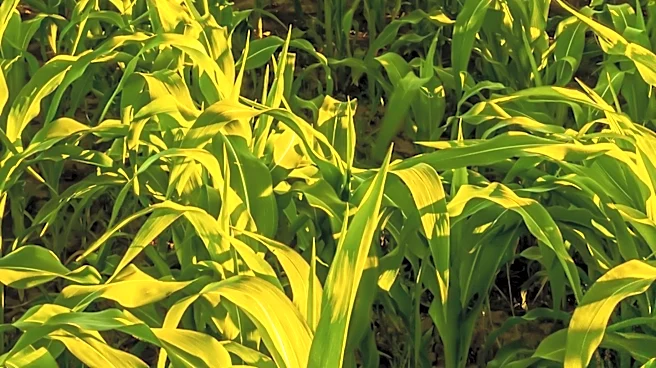
the state's hybrid seed corn production. Detasseling involves manually removing tassels from corn plants to prevent unwanted pollination and maintain seed quality. However, changing labor market conditions have led many young people to opt for less physically demanding jobs in retail and food service, which offer comparable wages. Brian Hagan, owner of Hagan Detasseling in Buffalo County, has seen his workforce shrink from approximately 180 to 75 employees. Despite the decline, some young individuals, like 15-year-old Braden Swartz, continue to take on the job for income, social interaction, and to uphold family traditions, often saving for significant purchases like a first car. The industry is increasingly relying on migrant workers to fill the labor gap.
Why It's Important?
The ongoing labor shortage in corn detasseling poses a significant challenge to Nebraska's seed corn industry, which is vital for agricultural productivity across the U.S. The inability to secure sufficient local youth labor could lead to increased operational costs as companies seek alternative workforces, potentially impacting the price and availability of hybrid seed corn. This shift also reflects broader changes in the U.S. youth labor market, where physically demanding agricultural jobs are becoming less attractive compared to service sector roles. The reliance on migrant workers highlights a growing trend in U.S. agriculture to address labor deficits, which can have economic and social implications for both local communities and migrant populations. If this trend continues, it could necessitate technological advancements in detasseling or further changes in labor recruitment strategies to maintain the efficiency and competitiveness of the seed corn sector.
What's Next?
As labor shortages persist, Nebraska's seed corn industry will likely continue to explore various strategies to ensure adequate staffing for detasseling. This could include further increasing reliance on migrant workers, potentially leading to policy discussions around agricultural labor and immigration. Companies may also invest in technological solutions, such as automated detasseling machinery, to reduce dependence on manual labor, though such transitions can be costly and require significant capital investment. Efforts might also be made to re-brand or incentivize agricultural jobs to attract local youth, possibly through higher wages, improved working conditions, or educational programs highlighting the importance of agriculture. The long-term viability of traditional corn detasseling as a summer job for local youth appears to be diminishing, suggesting a permanent shift in the labor dynamics of this agricultural practice.
Beyond the Headlines
The decline in youth participation in corn detasseling points to deeper societal and economic shifts in the U.S. It reflects a changing perception of work among younger generations, who may prioritize comfort and convenience over traditional physically demanding jobs, even if the pay is similar. This trend could have cultural implications, as the 'rite of passage' aspect of detasseling for many Nebraskan youth diminishes, potentially weakening connections between younger generations and agricultural heritage. Furthermore, the increasing reliance on migrant labor raises ethical considerations regarding fair wages, working conditions, and the social integration of these workers into rural communities. This situation underscores the ongoing tension between maintaining traditional agricultural practices and adapting to modern labor market realities, potentially leading to a more industrialized and less community-integrated agricultural workforce.