





What's Happening?
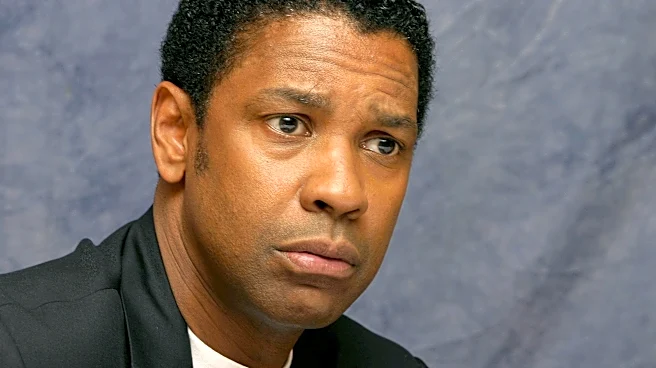
Actor Denzel Washington has openly criticized the 1988 Oscar-winning film "Mississippi Burning," stating that it does not accurately represent the history of the civil rights movement. According to Far Out Magazine, Washington specifically took issue
with the film's portrayal of two white FBI agents as the primary saviors in the investigation of the murders of civil rights activists James Chaney, Andrew Goodman, and Michael Schwerner. He asserted that "There were not two white FBI men who came in and made everything better." This sentiment was echoed by his frequent collaborator Spike Lee, who described the film as suggesting that Black people were "cowards who got beat up, lynched, and the glorious FBI saved our necks." The film, while loosely based on real events, faced accusations of adopting a 'white savior' narrative, despite its critical acclaim and multiple Academy Award nominations.
Why It's Important?
Denzel Washington's critique of "Mississippi Burning" highlights ongoing debates within Hollywood and broader society regarding the accurate and responsible portrayal of historical events, particularly those involving racial injustice and civil rights. His comments underscore the importance of narrative control and authenticity in storytelling, especially when depicting marginalized communities. The film's commercial success and critical accolades, juxtaposed with strong objections from prominent Black artists, reveal a persistent tension between artistic license and historical fidelity. This discussion is crucial for U.S. audiences and filmmakers, as it influences how historical narratives are understood and remembered, and it challenges the industry to consider the ethical implications of its creative choices and their impact on cultural memory.
Beyond the Headlines
The controversy surrounding "Mississippi Burning" extends beyond mere historical accuracy, touching upon deeper ethical and cultural implications. The 'white savior' trope, as identified by Washington and Lee, is a recurring theme in Hollywood that often diminishes the agency and contributions of people of color in their own struggles for liberation. This pattern can perpetuate harmful stereotypes and misrepresent the complexities of historical movements. The film's success despite these criticisms also raises questions about who controls historical narratives in popular culture and whose perspectives are prioritized. This ongoing dialogue encourages a more critical consumption of media and pushes for greater diversity and authenticity in filmmaking, ensuring that stories of civil rights and other significant historical events are told with integrity and respect for all involved.