







What's Happening?
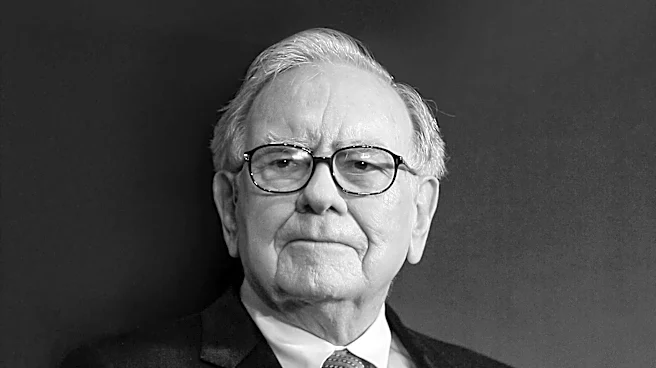
A 27-year-old warning from Warren Buffett regarding technology investing is gaining renewed importance for investors today, particularly amidst the artificial intelligence (AI) boom. In 1999, Buffett cautioned investors against being overly enamored with
the internet industry, emphasizing that the key to investing is not assessing an industry's societal impact or growth potential, but rather determining a company's competitive advantage and its durability. He illustrated this by noting that while the automobile and aviation industries profoundly impacted society, they did not necessarily make investors rich. Buffett's core principle, as summarized in a Fortune Magazine article, is to focus on companies with 'wide moats'—sustainable competitive advantages. This advice is particularly pertinent as AI-linked companies now account for approximately half of the S&P 500's market capitalization, according to The Motley Fool.
Why It's Important?
Buffett's enduring warning is crucial for U.S. investors navigating the current AI-driven market. The rapid growth and societal impact of AI can lead to speculative bubbles, similar to the dot-com era, where investors prioritize hype over fundamental value. By emphasizing 'durable competitive advantage,' Buffett guides investors to look beyond immediate technological breakthroughs and assess a company's long-term profitability and market position. This perspective is vital for protecting U.S. retirement savings and investment portfolios from potential downturns if AI companies without strong moats fail to sustain their growth. It encourages a more disciplined and analytical approach to investing in rapidly evolving sectors, fostering greater financial stability and informed decision-making among U.S. investors.
What's Next?
Investors are advised to apply Buffett's 'wide moat' principle when evaluating AI-linked companies. This means scrutinizing whether these companies possess sustainable competitive advantages, such as proprietary technology, strong brand recognition, or significant network effects, that can withstand future competition. The challenge lies in identifying which AI companies will emerge as long-term profit makers, as the winners are often only clear in hindsight. While companies like Alphabet, with its full-stack AI capabilities and strong existing businesses, appear to have a moat, investors need to critically assess newer AI firms. The continued build-out of AI infrastructure and the increasing market capitalization of AI-linked companies will necessitate ongoing vigilance and adherence to fundamental investment principles to avoid potential pitfalls.
Beyond the Headlines
Buffett's 1999 warning transcends mere investment advice; it's a timeless commentary on human psychology and the cyclical nature of market enthusiasm. The allure of transformative technology often blinds investors to the harsh realities of competition and profitability. His examples of the automobile and aviation industries, which revolutionized society but yielded poor investor returns, serve as a powerful historical lesson. This perspective encourages a deeper understanding of economic value creation versus technological innovation alone. It also raises ethical questions about the responsibility of market leaders and financial media to temper speculative fervor with sound, long-term analysis. In the age of AI, where the potential for societal change is immense, Buffett's wisdom calls for a balanced approach that celebrates innovation while grounding investment decisions in proven principles of business durability and competitive advantage.