




What's Happening?
New information has emerged linking Cenly Chen, former chief growth officer at Super Micro Computer, to Ajay Puri, who was Nvidia's top sales executive until his retirement this year. Chen and Puri are married. This connection is significant in light
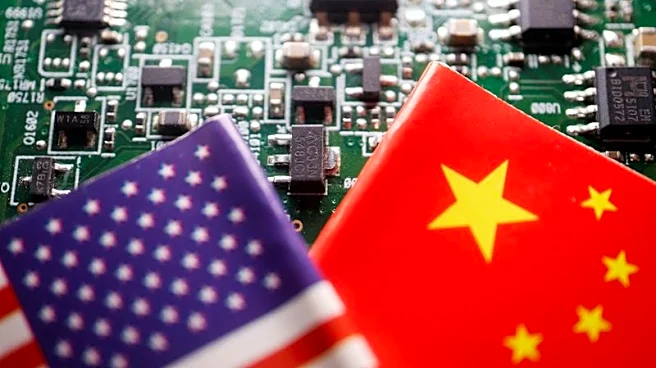
of a securities class action lawsuit filed on October 9, which alleges that Chen managed Super Micro's purchases of Nvidia GPUs and, with CEO Charles Liang's approval, decided their allocation among customers. Federal prosecutors in Manhattan previously charged Super Micro co-founder Wally Liaw and others in March over an alleged scheme to divert servers with approximately $2.5 billion worth of Nvidia GPUs to China. One former employee claims Chen left Super Micro in April because she had emailed Nvidia requesting the release of chips tied to the diverted GPUs. Chen became CEO of ChronoScale, an AI cloud company heavily reliant on Nvidia GPUs, in May. Chen denies that allocating Nvidia chips was part of her job, and Super Micro also denies she controlled GPU distribution. She is not a defendant in the class action and has not been accused of wrongdoing by any government agency.
Why It's Important?
This development is important because it highlights potential conflicts of interest and raises questions about the integrity of supply chains for critical technology like Nvidia GPUs, especially in the context of export controls. The alleged scheme to divert GPUs to China underscores the challenges in enforcing such controls and the potential for illicit trade. The marital connection between a former top sales executive at Nvidia and a former Super Micro executive allegedly involved in GPU allocation could lead to increased scrutiny from regulators and investors regarding corporate governance and ethical practices within both companies. If proven, such connections could imply a lack of oversight or even complicity in circumventing export regulations, potentially impacting the reputations and stock values of these key players in the technology sector. It also emphasizes that the effectiveness of export controls relies heavily on the internal compliance systems of companies involved in the distribution of advanced chips.
What's Next?
The ongoing legal proceedings, including the trial of Super Micro co-founder Wally Liaw in March 2027 and the securities class action lawsuit, will likely continue to uncover more details regarding the alleged GPU diversion scheme. Further investigations may be initiated by regulatory bodies to examine the extent of any potential conflicts of interest or breaches of export controls involving Nvidia and Super Micro. The questions raised by Fortune regarding Chen's timeline of employment and her role at ChronoScale, an AI cloud company that relies on Nvidia GPUs, will likely require clarification. Stakeholders will be watching for how these companies address the allegations and whether any internal reforms are implemented to strengthen compliance systems. The outcome of these legal and investigative processes could have significant implications for how technology companies manage their supply chains and adhere to international trade regulations.
Beyond the Headlines
This situation delves into the complex interplay between personal relationships, corporate ethics, and national security concerns related to technology export controls. The alleged diversion of advanced GPUs to China highlights the broader geopolitical tensions surrounding technological supremacy and the efforts by various nations to control access to critical components. The case also brings to light the potential vulnerabilities within the supply chains of global technology companies, where personal connections could theoretically be exploited to bypass regulations. It underscores the ethical dilemmas faced by executives who may have divided loyalties or access to sensitive information. The scrutiny on Super Micro and Nvidia could prompt a re-evaluation of internal compliance mechanisms across the semiconductor industry, leading to more stringent oversight and transparency requirements to prevent similar incidents in the future. This case serves as a stark reminder that the effectiveness of international sanctions and export controls is often tested at the corporate level.