
What's Happening?
U.S. consumers are increasingly using Black Friday discounts to purchase everyday necessities rather than traditional holiday gifts, indicating a shift in spending habits influenced by persistent inflation
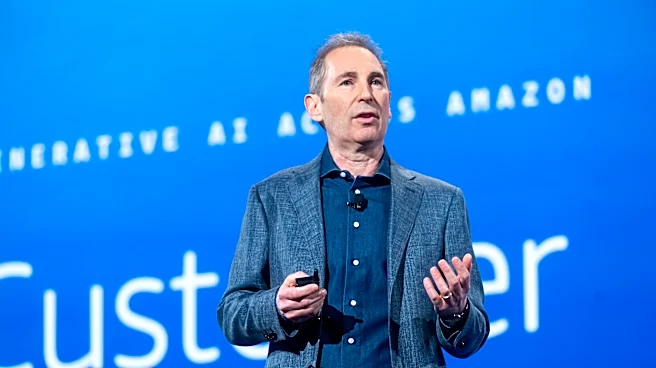
and household budget concerns. Online sales of personal hygiene products, household cleaning products, and basic clothing saw significant jumps of 40%, 33%, and 27% respectively, compared to October's average. This trend is expected to favor retail giants like Walmart and Amazon, which offer essential merchandise. Additionally, AI-assisted shopping is gaining momentum, with Walmart CEO John Furner reporting that customers using its AI assistant, Sparky, spent 40% more per order. Amazon CEO Andy Jassy noted that American customers using Alexa spent 50% more than non-users. Despite strong headline sales, deeper discounts (8% deeper than last year) are pushing average merchandise selling prices 1% lower, potentially impacting retailer profitability.
Why It's Important?
This shift in consumer spending patterns has significant implications for the U.S. retail landscape. The focus on necessities over discretionary items during peak shopping seasons suggests a more cautious consumer, which could benefit retailers with strong essential goods offerings, such as Walmart, while putting pressure on those heavily reliant on discretionary purchases. The increasing adoption of AI-assisted shopping tools by consumers, as evidenced by higher spending from users of Walmart's Sparky and Amazon's Alexa, indicates a growing reliance on technology to navigate purchasing decisions. This trend could become a crucial differentiator for retailers, making investments in AI shopping assistants a meaningful driver of revenue and customer engagement. However, the deeper discounts observed also highlight potential challenges to retailer profitability, necessitating careful management of merchandise mix, comparable sales, gross margins, and inventory levels.
What's Next?
Investors will closely monitor upcoming quarterly reports from retailers, particularly focusing on merchandise mix, comparable sales, gross margins, and inventory levels to assess the impact of these shifting consumer behaviors and discounting strategies. Walmart and Amazon's continued investments in AI shopping assistants are likely to intensify, as these tools demonstrate a clear link to increased customer spending. The success of these AI initiatives will depend on whether higher customer spending translates into sustainable profitability rather than merely reflecting the purchasing habits of existing high-spending customers. Retailers specializing in discretionary goods may need to adapt their strategies to attract budget-conscious consumers, potentially through more aggressive promotions or by diversifying their product offerings to include more essential items.
Beyond the Headlines
The evolving consumer behavior, driven by economic pressures and technological adoption, points to a broader transformation in the retail industry. The integration of AI into the shopping experience, from personalized recommendations to voice-activated purchasing, is not just a convenience but a strategic imperative for retailers seeking to maintain market share and drive growth. This trend also raises questions about digital literacy and access, as consumers who effectively leverage AI tools may gain advantages in finding deals and managing budgets. Furthermore, the emphasis on necessities could signal a more permanent shift in consumer values, prioritizing practical needs over aspirational wants, which could reshape product development and marketing strategies across various sectors. The data also hints at the potential for AI to further personalize the shopping experience, potentially leading to more nuanced pricing strategies and targeted promotions in the future.