






What's Happening?
The U.S. economy experienced an annualized GDP growth of 3.4% in the third quarter of 2026, an increase from 2.2% in Q2 and 2.5% in Q1. This growth was primarily driven by robust consumer spending, which contributed 2.52 percentage points to GDP, and aggressive
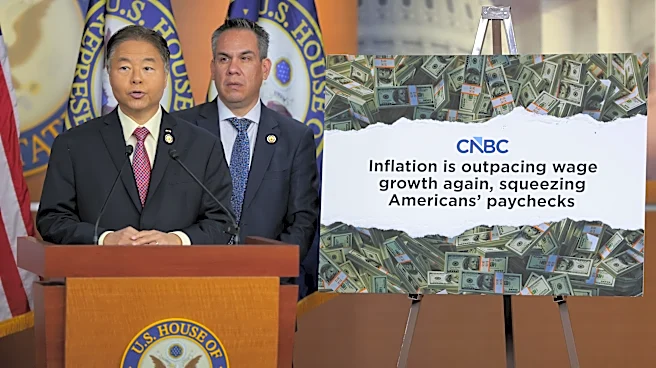
corporate spending on Artificial Intelligence (AI) infrastructure, reflected in a 12.7% rise in nonresidential fixed investment. Despite these positive indicators, the broad market saw a slight decline in October, with the tech-heavy Nasdaq Composite Index falling 5.3% and the Nasdaq-100 dropping 6.7%, largely due to a tumble in AI-related stocks. Inflation remains a concern, with the Consumer Price Index (CPI) at 3.7% year-over-year in September and the Core PCE Price Index rising 3.1%. The Federal Reserve, under Chairman Kevin Warsh, raised the Fed Funds rate by 25 basis points in September, marking its first hike in three years, and is anticipated to implement another hike in December.
Why It's Important?
The continued GDP growth and strong consumer spending highlight the resilience of the U.S. economy, even in the face of ongoing inflation and geopolitical tensions. The significant corporate investment in AI infrastructure indicates a major shift in business priorities, with companies seeking to boost productivity and return on investment through advanced technology. However, the market's volatility, particularly the decline in AI stocks in October, suggests investor apprehension regarding the sustainability of the AI boom and potential overvaluation. The Federal Reserve's interest rate hikes signal a commitment to combating inflation, which could impact borrowing costs for businesses and consumers. The mixed economic signals—strong growth alongside inflation and market fluctuations—create an uncertain environment for future economic planning and investment strategies across various sectors.
What's Next?
The calendar Q3 2026 earnings season is expected to continue strongly, with S&P 500 earnings from continuing operations projected to rise in the mid-to-high 20% range. This strong earnings momentum could alleviate fears of excess valuations, despite stocks being near all-time highs. The Federal Reserve is anticipated to raise interest rates for a second time in 2026 at its December meeting, by another quarter point, to address persistent inflation. The monetary policy outlook for 2027 suggests a potential rate cut if inflation slows to the Fed's 2% target. Investors will be closely watching for further guidance on Q4 2026 and preliminary 2028 forecasts for S&P 500 earnings. The market's performance in November, historically a strong month, will be crucial, especially after the midterm elections, which typically reduce political uncertainty.
Beyond the Headlines
The economic narrative reveals a complex interplay between technological advancement, inflation, and geopolitical factors. The shift from generative AI to agentic AI, with significant infrastructure build-out, signifies a deeper integration of AI into enterprise and sovereign operations, potentially reshaping industries and labor markets. The ongoing tariff situation, particularly concerning semiconductors and technology hardware imports vital for AI, poses a hindrance to business planning and could impact the cost and availability of critical components. The divergence in consumer and business sentiment—businesses guardedly optimistic due to AI, while consumers worry about inflation and job availability—highlights a growing economic divide. This could lead to social and political pressures if wage growth continues to lag behind inflation, affecting household purchasing power and overall economic stability.