







What's Happening?
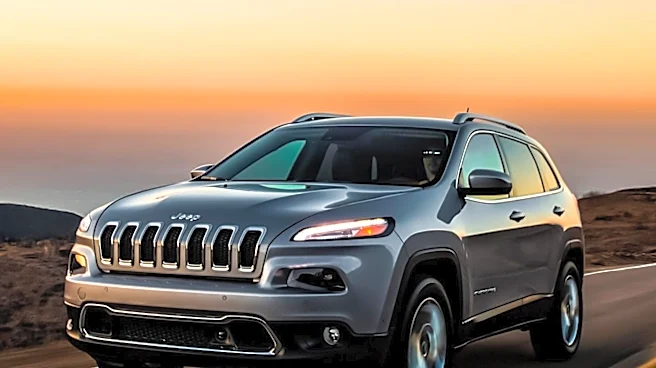
Jeep marked its 85th anniversary at the Toledo Assembly Complex, a significant event that brought together Stellantis executives, plant leadership, United Auto Workers (UAW) representatives, and employees. The celebration included a rare halt in production
to honor the workforce's contribution to Jeep's legacy. Stellantis CEO Antonio Filosa praised the employees, emphasizing their role in Jeep's identity as a symbol of freedom and adventure. The event also highlighted Jeep's historical roots, dating back to 1941 when Willys-Overland was selected to produce military vehicles. The Toledo plant, known for its diverse production of Jeep Wranglers, is set to receive nearly $400 million in investments, promising future updates and the introduction of a new midsize pickup, the Ram Dakota, by 2028. This investment is expected to create approximately 900 jobs, reinforcing the plant's importance to the region.
Why It's Important?
The celebration underscores the deep connection between Jeep and the Toledo community, where generations have contributed to the brand's global recognition. The planned investments and job creation signal a strong commitment to the local economy and the automotive industry. By halting production to celebrate, Stellantis acknowledges the workforce's pivotal role in maintaining Jeep's reputation for quality and innovation. The introduction of new models and updates to existing ones not only secures jobs but also positions Jeep to remain competitive in the evolving automotive market. This move is crucial as the industry faces challenges such as electrification and changing consumer preferences.
What's Next?
Looking ahead, the Toledo Assembly Complex will undergo significant updates to accommodate new models, including the anticipated Ram Dakota. The investment will likely attract further economic activity to the region, benefiting local suppliers and businesses. Additionally, the mention of a new Jeep model suggests ongoing innovation and potential expansion of Jeep's product lineup. Stakeholders, including employees, local government, and industry partners, will be closely watching the implementation of these plans and their impact on the community and the broader automotive market.