






What's Happening?
Tesla's stock (TSLA) recently closed at $399.81, with analysts setting a central target of $460, representing a potential 15% gain. This target is an average of verified analyst forecasts that exceed the current price. The overall average of all tracked
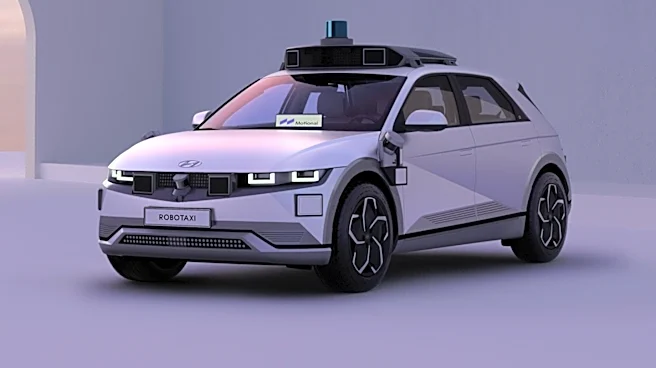
targets is around $412, with a wide range from $128 to $600, reflecting significant disagreement among experts. Bullish sentiment is driven by the expansion of Tesla's robotaxi service, the introduction of Cybercab and Semi, strong demand for its energy storage business (Megapack), and the potential of the Optimus humanoid robot and 'physical AI.' Additionally, a possible combination with SpaceX is seen as a recurring bullish catalyst. Conversely, bears point to Tesla's high valuation, trading near 440 times trailing earnings, and weakening third-quarter profitability, where operating income and net income declined despite stable revenue. Rising competition in EVs and autonomous technology, along with the risk of robotaxi and robot ambitions underperforming, also contribute to bearish outlooks.
Why It's Important?
The trajectory of Tesla's stock price and its ability to reach the $460 target has significant implications for the broader technology and automotive sectors, as well as for investor confidence in high-growth, speculative ventures. Tesla's performance often serves as a bellwether for the electric vehicle market and advancements in autonomous driving and AI. If Tesla successfully expands its robotaxi services and achieves its cost targets, it could validate the viability of autonomous ride-sharing as a profitable business model, potentially disrupting traditional transportation industries. The company's ventures into humanoid robotics and AI also represent significant long-term bets that could reshape various industries if successful. However, the high valuation and profitability concerns highlight the risks associated with investing in companies that rely heavily on future technological breakthroughs and market adoption. A failure to meet ambitious targets could lead to significant market corrections and impact investor appetite for similar innovative but unproven technologies.
What's Next?
Investors will closely monitor several key indicators to assess Tesla's path toward the $460 target. Quarterly delivery figures, earnings per share (EPS), and margin trends will provide insights into the company's core automotive business profitability. The expansion of the robotaxi service, including miles driven and operational efficiency, will be crucial for validating its autonomous driving ambitions. Updates on energy storage order flow, particularly for Megapack, will indicate the growth of its energy division. Any concrete news regarding a potential combination with SpaceX could also significantly influence investor sentiment. Furthermore, changes in analyst price target ranges will be important, given the current wide disagreement on Tesla's valuation. Macroeconomic conditions, such as interest rates, will also play a role, as they influence investor expectations for long-duration growth stocks. Management expects robotaxis to begin making a noticeable financial contribution in Q2 2027, making the $0.30-per-mile operating cost target a critical metric to watch.
Beyond the Headlines
The debate surrounding Tesla's valuation extends beyond traditional financial metrics, touching upon the fundamental question of whether it is primarily an automotive manufacturer or an emerging AI and robotics platform. This distinction has profound implications for how the company is valued and perceived by investors. If Tesla successfully transitions into a dominant AI and robotics entity, it could redefine industry classifications and investment paradigms, potentially leading to a re-evaluation of how technology companies are assessed. The ethical and regulatory challenges associated with widespread autonomous vehicle deployment and humanoid robots also represent significant long-term considerations. Public acceptance, safety standards, and legal frameworks will need to evolve in parallel with technological advancements. The success or failure of Tesla's ambitious projects could set precedents for future innovations in AI, robotics, and sustainable energy, influencing technological development and societal integration for decades to come.