
What's Happening?
A recent UBS report, led by U.S. softlines analyst Jay Sole, suggests that Nike's recent performance issues are company-specific rather than indicative of a broader industry downturn. The report argues
that the market has been misinterpreting Nike's results as a proxy for the overall health of the athletic footwear industry. Sole attributes Nike's struggles to two main factors: ongoing efforts to repair relationships with key retailers that were previously abandoned during CEO John Donahoe’s tenure, and an over-reliance on legacy styles, leading to excess inventory and a lack of new product innovation. In contrast, other athletic performance brands like On Holding, Hoka (Deckers Outdoors), Salomon (Amer Sports), Saucony and Merrell (Wolverine Worldwide), and Under Armour are showing strong growth potential. These brands have avoided deep discounting, maintaining better margins for retailers and momentum with consumers. The report highlights a global health and wellness trend driving increased participation in sports, particularly running, which is benefiting these competitors.
Why It's Important?
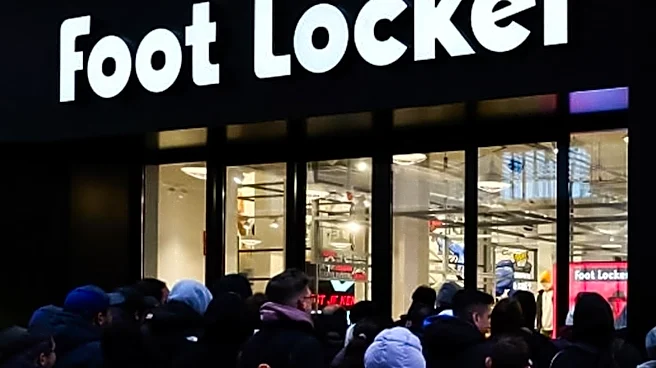
This shift in market perception is significant for the U.S. retail and footwear industries. For years, Nike has been considered the dominant force and a reliable indicator of market trends. The UBS report challenges this view, suggesting that investors and retailers should look beyond Nike's performance to assess the true health of the athletic footwear sector. This could lead to a reallocation of investment and retail shelf space towards brands identified as having stronger growth trajectories and better profit margins. Retailers heavily reliant on Nike, Jordan, and Converse brands, such as Foot Locker, have experienced weakness, while multi-brand retailers like JD Sports and Dick's Sporting Goods have performed better in their core banners. This indicates a potential power shift in the athletic wear market, where brands prioritizing innovation, retailer relationships, and pricing power are gaining ground, impacting supply chain strategies and marketing efforts across the industry.
What's Next?
The athletic performance footwear market is expected to continue benefiting from the global health and wellness trend, which UBS predicts will be a long-lasting phenomenon. Brands like On, Hoka, Salomon, and Under Armour are anticipated to outperform in the near term and beyond, with their shares rated 'Buy' due to underestimated growth potential. Upcoming investor days for Amer Sports, On, Adidas, and Nike in September and November will likely provide further insights into their strategies and product pipelines. Specifically, Amer Sports is expected to discuss innovation boosting Salomon in running footwear, while On will highlight new product innovations, some debuting in the U.S. in October. Retailers may increasingly migrate orders to brands that offer higher profit margins and maintain consumer momentum, even as Nike works to clear its inventory and rebuild its wholesale partnerships. This could lead to increased competition and innovation in the athletic footwear space.
Beyond the Headlines
The UBS report subtly points to a broader evolution in consumer behavior and brand loyalty within the athletic wear sector. Consumers are increasingly seeking versatile, high-performance footwear that also offers style and comfort for various activities, moving beyond traditional brand allegiances. The success of brands like On and Hoka, which have maintained pricing power and introduced innovative products, suggests a market that values quality and specific functional benefits over sheer brand recognition. This trend could encourage other brands to invest more heavily in research and development, focusing on specialized features and sustainable practices to attract discerning consumers. Furthermore, the report highlights the importance of strong retailer relationships and a diversified product portfolio for long-term success, signaling a potential shift away from direct-to-consumer models if not carefully balanced with wholesale partnerships. This could reshape how athletic brands engage with their distribution channels and ultimately, their end consumers.