




What's Happening?
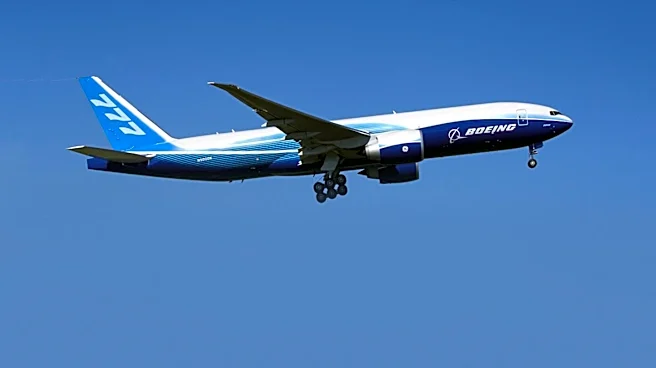
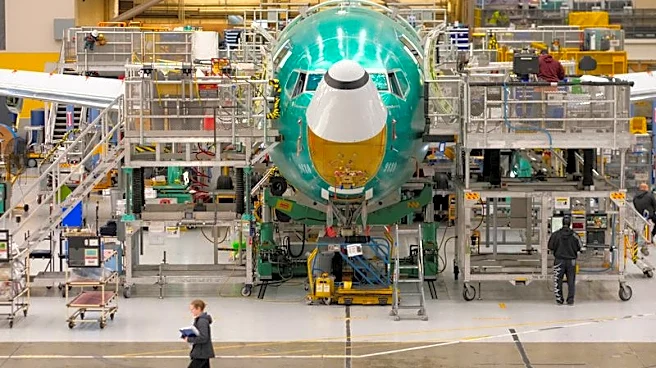
Boeing has reported its financial results for the second quarter of 2026, highlighting a revenue increase to $24.6 billion, primarily due to 171 commercial deliveries. Despite this, the company posted a GAAP loss per share of $0.67 and a core loss per share of $0.76.
Operating cash flow was reported at $1.4 billion, with free cash flow at $0.6 billion. Boeing's total company backlog reached a record $715 billion, including over 6,200 commercial airplanes. The company attributes its financial performance to higher commercial delivery volumes and favorable working capital. Boeing's president and CEO, Kelly Ortberg, emphasized the company's focus on safety, quality, and on-time performance as key factors in their ongoing progress.
Why It's Important?
Boeing's financial results are significant as they reflect the company's recovery trajectory and operational stability following past challenges. The increase in revenue and record backlog indicate strong demand for Boeing's commercial airplanes, which is crucial for the company's long-term growth and competitiveness in the aerospace industry. The financial performance also impacts stakeholders, including investors, employees, and suppliers, as it suggests potential for future profitability and business expansion. Additionally, Boeing's focus on safety and quality is critical in restoring trust with customers and regulatory bodies, which is essential for securing future contracts and maintaining market leadership.
What's Next?
Looking ahead, Boeing plans to continue its focus on operational stability and meeting certification timelines for its aircraft models. The company anticipates certification and first deliveries of the 737-7 and 737-10 in 2026 and 2027, respectively. Boeing's ongoing efforts to enhance safety and quality are expected to play a pivotal role in achieving these milestones. The company also aims to leverage its record backlog to drive future revenue growth and improve financial performance. Stakeholders will be closely monitoring Boeing's progress in these areas, as well as any potential impacts from geopolitical and economic factors that could influence the aerospace market.