




What's Happening?
In California, the largest electric vehicle (EV) market in the United States, car buyers are increasingly opting for hybrid vehicles over fully electric ones. According to data from the California New Car Dealers Association (CNCDA), hybrids accounted
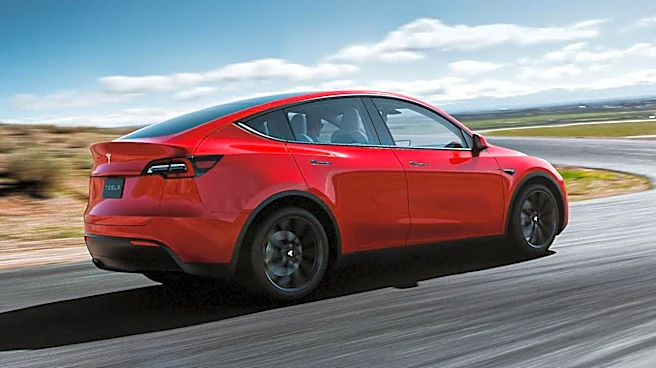
for 22.1% of new car registrations in the first half of 2026, compared to 15.9% for EVs. The Toyota Camry, a hybrid-only model, is the second best-selling vehicle in the state, following the Tesla Model Y. This trend marks a shift from the previous year when EVs slightly outpaced hybrids. The data also shows that three of the top five best-selling passenger cars in California offer hybrid powertrains, with the Tesla Model 3 being the only fully electric vehicle in this group. Despite California's push for EV adoption, factors such as cost and fuel efficiency are driving consumers towards hybrids.
Why It's Important?
The preference for hybrids over EVs in California highlights significant consumer behavior trends that could impact the automotive industry. Hybrids offer a compromise between traditional gasoline vehicles and fully electric cars, providing improved fuel efficiency without the need for charging infrastructure. This trend could influence automakers to focus more on hybrid technology, potentially slowing the transition to fully electric vehicles. Additionally, the shift may affect California's environmental goals, as hybrids still rely on fossil fuels. The data also suggests that while California remains a leader in EV adoption, economic factors and consumer preferences are pivotal in shaping the market. Automakers like Toyota, Honda, and Tesla, which dominate new car registrations, may need to adjust their strategies to align with these consumer trends.
What's Next?
As California continues to promote EV adoption through incentives and credits, the automotive industry may see further developments in hybrid technology. Automakers could increase their hybrid offerings to meet consumer demand, potentially leading to more hybrid-only models. The state’s policies and incentives will play a crucial role in shaping future market dynamics. Additionally, the performance of EV manufacturers like Tesla and Rivian, which have seen a decline in registrations, will be closely monitored. The ongoing balance between hybrid and EV sales will likely influence future regulatory and market strategies, impacting both consumers and manufacturers.