






What's Happening?
Researchers at the University of Missouri are leveraging artificial intelligence to optimize planting decisions for corn farmers, aiming to increase efficiency and reduce production costs. The study, led by Jasmine Neupane, an assistant professor of agricultural
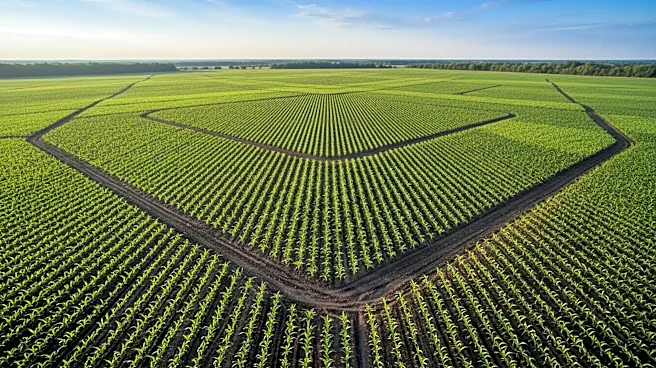
systems technology, focuses on variable-rate seeding (VRS) plans. These plans adjust seed populations based on specific field conditions, such as soil quality and moisture levels, rather than applying a uniform seeding rate across an entire field. The AI model integrates data on soil characteristics, elevation, and historical crop yields to tailor planting strategies. This approach not only enhances yield potential but also minimizes the use of fertilizers and crop protection products, thereby reducing environmental impacts like nutrient runoff.
Why It's Important?
The implementation of AI in agriculture represents a significant advancement in precision farming, offering potential benefits for both economic and environmental sustainability. By enabling farmers to make data-driven decisions, AI can lead to more efficient resource use, reducing costs associated with over-application of seeds, fertilizers, and chemicals. This technology supports environmental stewardship by preventing unnecessary chemical applications, which can lead to soil and water contamination. As agriculture faces increasing pressure to produce more with fewer resources, AI-driven solutions could play a crucial role in meeting these demands while minimizing ecological footprints. The success of such technologies could influence broader adoption across the agricultural sector, potentially transforming farming practices on a global scale.
What's Next?
The research team plans to continue testing and refining the AI-driven planting strategies at the University of Missouri's Digital Agriculture Research and Extension Center. Future studies will focus on expanding the application of AI to other crops and exploring its potential under varying weather conditions. The ongoing research aims to enhance the accuracy and reliability of AI recommendations, ultimately providing farmers with robust tools for strategic field management. As the technology matures, it is expected to gain traction among farmers seeking to optimize their operations and improve sustainability.