





What's Happening?
Andreessen Horowitz (a16z), a prominent venture capital firm, has rebranded its dedicated digital assets fund, previously known as a16z Crypto, to a16z Frontier. This change, announced eight years after its initial launch in 2018, signifies an expansion
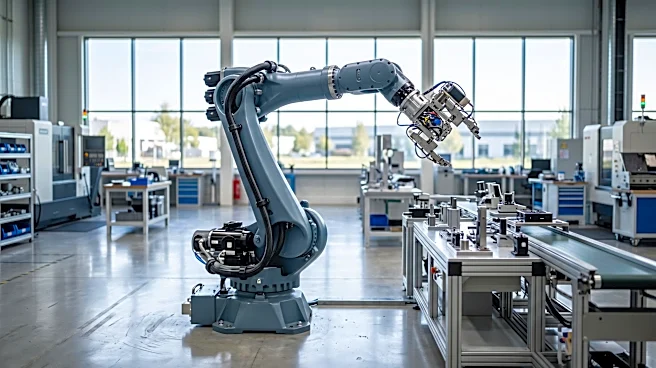
of the fund's investment scope beyond solely cryptocurrency and blockchain technologies. The newly named a16z Frontier will now also focus on backing startups developing artificial intelligence (AI), robotics, and other emerging technologies. Managing partner Chris Dixon will lead the fund alongside Marc Andreessen, Ben Horowitz, and general partners Eddy Lazzarin and Guy Wuollet. The firm's $2.2 billion fund, announced in May, will now encompass these broader technological areas. Despite the rebranding, a16z Frontier will continue to support crypto startups and advocate for crypto regulation. The decision to broaden the focus comes as the distinction between traditional companies utilizing blockchain technology and pure crypto companies becomes less clear, as noted by Chris Dixon.
Why It's Important?
This strategic shift by Andreessen Horowitz is significant for the U.S. technology and investment landscape. By expanding its focus to include AI and robotics, a16z Frontier is signaling a strong belief in the growth potential of these sectors, potentially directing substantial capital towards their development. This move could accelerate innovation in AI and robotics, leading to new technologies, products, and services that impact various industries, from manufacturing and healthcare to consumer applications. For the cryptocurrency market, while a16z Frontier will continue to invest, the rebranding suggests a maturation of the blockchain space, where its applications are increasingly integrated into broader technological solutions rather than existing as a standalone sector. This could influence other venture capital firms to diversify their portfolios, fostering a more integrated approach to emerging technologies and potentially driving a new wave of cross-sector innovation. The increased investment in AI and robotics could also bolster U.S. competitiveness in these critical technological fields.
What's Next?
Following the rebranding, a16z Frontier is expected to actively seek and invest in a wider array of startups across AI, robotics, and other frontier technologies. This will likely lead to increased competition for funding among startups in these sectors, while also providing more opportunities for innovative companies to secure significant capital. The firm's continued advocacy for crypto regulation suggests ongoing efforts to shape the regulatory environment for digital assets, which could lead to more clarity and stability in the crypto market. We may see other venture capital firms follow suit, adjusting their investment strategies to encompass a broader range of emerging technologies as the lines between different tech sectors blur. The firm's previous investments, such as leading a $33 million seed round for Ornn, an AI computing market company, and co-leading a funding round for prediction market Kalshi, indicate a proactive approach to these new areas, suggesting a steady flow of new investments in the coming months and years.
Beyond the Headlines
The rebranding of a16z Crypto to a16z Frontier reflects a deeper trend in the venture capital world: the convergence of cutting-edge technologies. The firm's recognition that blockchain technology is increasingly being integrated 'behind the scenes' into various businesses, rather than existing in isolation, highlights a shift towards a more holistic view of technological innovation. This could lead to a re-evaluation of how 'tech companies' are defined and funded, moving away from siloed categories towards a more interdisciplinary approach. The emphasis on 'frontier' technologies suggests a long-term vision focused on foundational advancements that could reshape multiple industries. This broader investment thesis could also influence talent markets, drawing more skilled professionals into AI and robotics, and potentially fostering new educational and research initiatives to support these growing fields. The ethical and societal implications of rapid advancements in AI and robotics will also become increasingly pertinent, requiring careful consideration from investors and innovators alike.