
What's Happening?
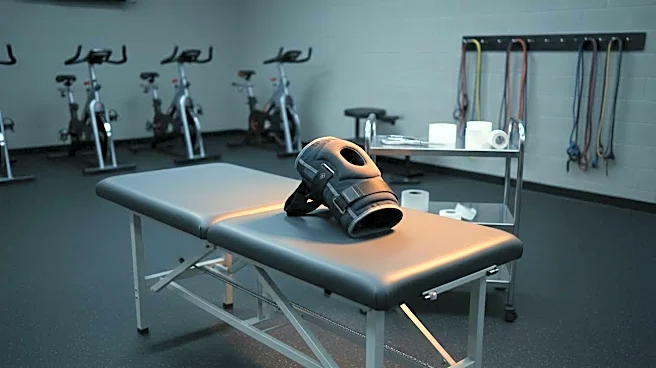
Trevor Goosby, the starting left tackle for the Texas Longhorns, sustained a knee injury during a practice session on Monday evening in Austin. Goosby, who is considered a key anchor for the offensive
line, underwent an MRI on Tuesday to determine the severity of the injury. The results of the MRI are expected to reveal the extent of the damage and provide a clearer timeline for his potential return. This injury occurred during a critical period for the Longhorns as they prepare for their upcoming season. Goosby's role as starting left tackle is vital for protecting the quarterback and establishing the run game, making his absence a significant concern for the team's offensive strategy. The team is now awaiting further information from the medical evaluations to understand the full impact of this development on their roster and game plans.
Why It's Important?
The knee injury to Trevor Goosby, the starting left tackle for the Texas Longhorns, carries significant implications for the team's offensive line and overall performance. As the 'anchor' of the offensive line, Goosby's presence is crucial for protecting the quarterback, creating running lanes, and maintaining offensive rhythm. His absence, depending on the severity and recovery timeline, could force the coaching staff to reshuffle the offensive line, potentially impacting cohesion and effectiveness. This could lead to increased pressure on the quarterback, reduced efficiency in the run game, and a general disruption of offensive schemes. For the Longhorns, who are likely aiming for a strong season, losing a key player at such a vital position could hinder their ability to compete at the highest level. The injury also highlights the inherent risks in contact sports and the constant challenge coaches face in managing player health and depth charts. The team's ability to adapt and find a suitable replacement will be critical to mitigating the negative effects of this injury.
What's Next?
The immediate next step for the Texas Longhorns is to await the full MRI results for Trevor Goosby to determine the exact nature and severity of his knee injury. This diagnosis will dictate his recovery timeline and whether he will miss any significant portion of the upcoming season. Following the medical assessment, the coaching staff will need to evaluate their options for replacing Goosby at the starting left tackle position. This could involve moving another experienced player into the role, or giving an opportunity to a younger player or a backup. The team will likely focus on adjusting their offensive line rotations and practice drills to account for Goosby's absence and ensure the remaining players are prepared to step up. The performance of the offensive line in the initial games of the season will be closely watched, as it will indicate how well the team has adapted to this unexpected challenge. The Longhorns' ability to maintain offensive stability without Goosby will be crucial for their overall success.
Beyond the Headlines
Trevor Goosby's knee injury underscores the broader challenges faced by collegiate athletic programs in managing player health and maintaining competitive rosters. Beyond the immediate impact on the Texas Longhorns' offensive line, such injuries can have long-term consequences for the individual athlete's career and well-being. The pressure on college athletes to perform at a high level, coupled with the physical demands of the sport, often leads to significant injury risks. This incident also highlights the importance of robust medical and rehabilitation support systems within athletic departments. The process of recovery, both physical and mental, can be arduous for athletes, and their ability to return to peak performance is often a testament to their resilience and the quality of care they receive. Furthermore, the injury could prompt discussions within the program about player safety protocols, practice intensity, and depth chart management to better prepare for unforeseen circumstances. The incident serves as a reminder of the human element in sports, where individual health can significantly influence team dynamics and strategic decisions.