

What's Happening?
PepsiCo has significantly reduced its estimate of the fair value of potential earnout payments tied to its 2025 acquisition of prebiotic soda brand Poppi. The liability for these payments dropped from $278 million at the end of 2025 to $12 million as of September
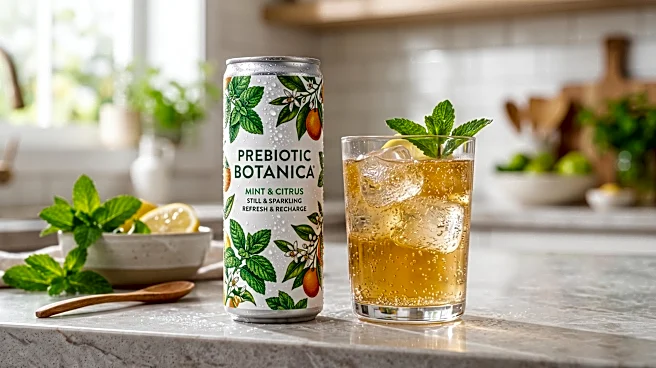
5, 2026, according to SEC filings. This reassessment comes despite the prebiotic soda category experiencing rapid growth, now accounting for nearly three-quarters of modern soda sales and generating approximately $1.32 billion in sales. Spate data indicates that prebiotic soda sales grew 13% year-over-year, with unit sales increasing even faster at 15.6%, suggesting strong consumer demand driven by volume rather than just pricing. Other major players, like Coca-Cola, are also entering the gut-health beverage market with prebiotic fiber-infused sodas.
Why It's Important?
PepsiCo's re-evaluation of Poppi's earnout payments, despite the category's robust growth, signals potential complexities in valuing high-growth, niche brands within the broader beverage market. This could reflect revised internal projections for Poppi's future performance or a more conservative outlook on the brand's ability to meet specific earnout targets. For the broader beverage industry, this highlights the challenges and risks associated with large acquisitions in rapidly evolving segments. The continued double-digit growth of prebiotic sodas, driven by volume, underscores a significant consumer shift towards functional beverages. This trend is attracting major players like Coca-Cola, intensifying competition and potentially leading to further innovation and market consolidation in the functional soda space. The situation also raises questions about the long-term profitability and scalability of brands that initially command high valuations based on rapid early growth.
What's Next?
The prebiotic soda market is poised for continued expansion and increased competition. Brands like Poppi, Olipop, and others are likely to broaden their product portfolios beyond gut health, incorporating other functional benefits such as energy, mood support, and hydration to differentiate themselves. This strategic diversification aims to capture a wider consumer base and sustain growth in an increasingly crowded market. The entry of major players like Coca-Cola with its own prebiotic offerings will further intensify competition, potentially leading to more aggressive marketing campaigns and product innovations. Companies will likely focus on unique flavor profiles and broader functionality to attract consumers, moving beyond prebiotics as the sole selling point. The industry will also be watching how PepsiCo manages Poppi's growth and integration, especially given the revised earnout estimates, which could influence future acquisition strategies in the functional beverage sector.
Beyond the Headlines
The dynamic in the prebiotic soda market, exemplified by PepsiCo's Poppi acquisition and subsequent valuation adjustment, reflects a broader trend in the consumer packaged goods (CPG) industry: the pursuit of 'better-for-you' products. While consumers are increasingly seeking beverages with perceived health benefits, the long-term sustainability and profitability of these trends are still being tested. The rapid growth of prebiotic sodas also highlights a shift in consumer perception of soda from a purely indulgent drink to one that can offer functional advantages. This evolution challenges traditional beverage categories and forces established companies to innovate or risk losing market share to agile, health-focused startups. The ongoing scientific scrutiny of the actual health benefits of these finished products will also play a crucial role in shaping consumer trust and regulatory oversight, potentially influencing future marketing claims and product development strategies across the functional food and beverage landscape.