

What's Happening?
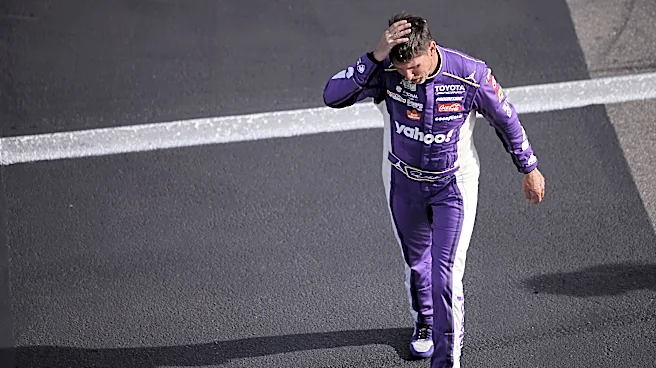
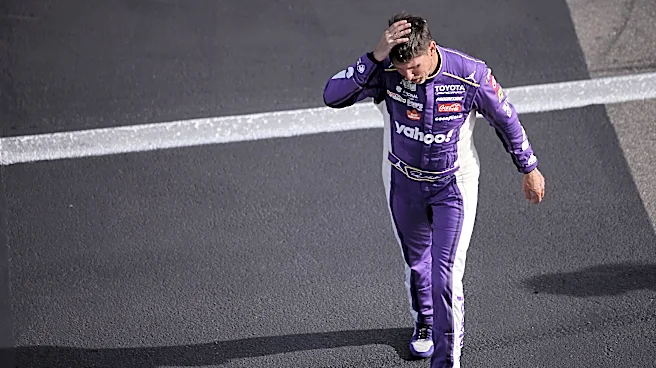
Denny Hamlin has expressed significant disappointment with Toyota's performance in the NASCAR Cup Series championship, despite the manufacturer securing a series-leading 18 victories across 35 races in 2026. Hamlin believes his chances of winning the elusive
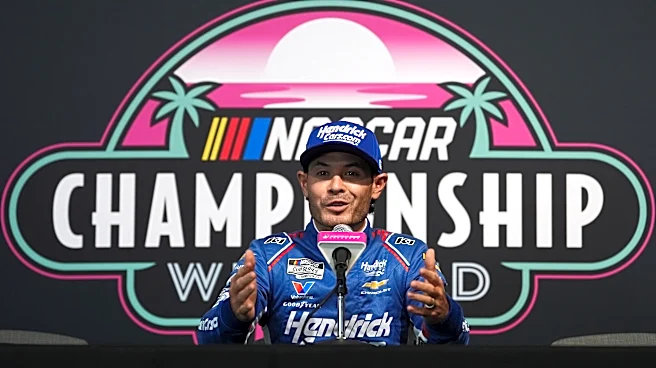
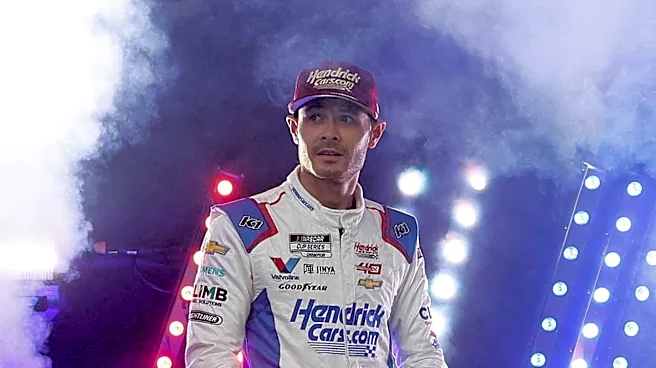
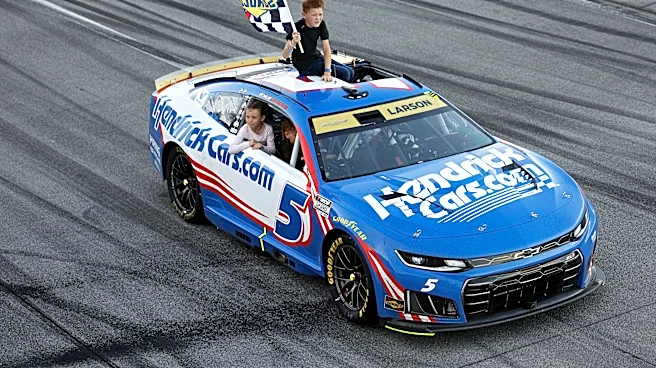
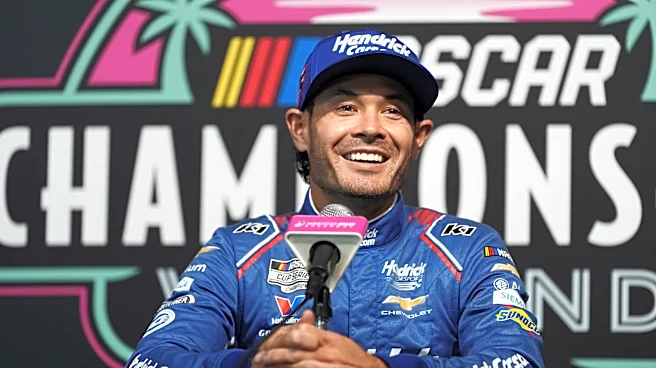
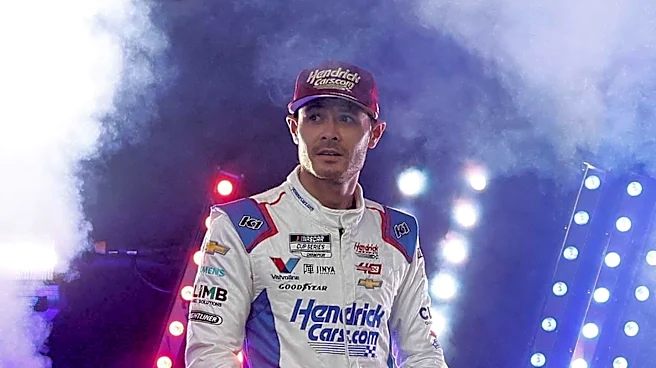
Cup Series championship are minimal, as Kyle Larson is poised to secure his second consecutive title. Hamlin is now focused on the 2027 season and has called for a 'deep dive' into what went wrong for Toyota, particularly regarding the disparity between their high win ratio and their championship success. Toyota has only three Cup championships in 20 years, with Kyle Busch winning two and Martin Truex Jr. one. Toyota Racing Development president Tyler Gibbs acknowledged that the competition has been stronger at tracks like Phoenix, which historically have not suited Toyota well. Larson's dominant postseason run, with three wins and eight top-10 finishes in nine Chase events, has effectively secured his championship.
Why It's Important?
Denny Hamlin's call for a 'deep dive' into Toyota's championship performance highlights a critical issue for manufacturers in competitive sports: translating regular-season dominance into ultimate victory. Despite Toyota's impressive 18 wins, their inability to secure the Bill France Cup raises questions about their strategy, car setup, or driver performance in high-stakes playoff races. This situation could lead to significant internal restructuring or strategic shifts within Toyota Racing Development, impacting engineering, team dynamics, and driver development. For NASCAR, a dominant manufacturer failing to win the championship can create compelling narratives and maintain competitive balance, preventing any single entity from consistently monopolizing titles. However, for Toyota, it represents a missed opportunity to capitalize on their regular-season success, potentially affecting sponsor relations, brand perception, and driver morale. The outcome of this internal review could influence future car designs, team collaborations, and overall competitive approaches in NASCAR.
What's Next?
Following the conclusion of the 2026 NASCAR Cup Series season, Toyota Racing Development is expected to conduct a thorough review, or 'deep dive,' into their performance, as advocated by Denny Hamlin. This analysis will likely focus on identifying the factors that prevented them from converting their numerous race wins into a championship title. Potential areas of investigation include car performance on specific playoff tracks, strategic decisions during critical races, and driver preparation. The findings from this review could lead to significant changes in Toyota's racing program for the 2027 season, including adjustments to vehicle development, engineering priorities, and team personnel. Hamlin, who has indicated 2027 might be his last season, will be keenly interested in these changes as he seeks his first Cup title. The broader NASCAR community will also watch to see how Toyota responds to this challenge and if they can translate their race-winning capability into championship success.
Beyond the Headlines
The situation with Toyota in NASCAR reflects a broader challenge in high-performance sports where consistent excellence doesn't always guarantee ultimate success. It underscores the psychological and strategic pressures of championship formats, where a single bad race or a competitor's exceptional performance can derail a season of strong results. This scenario could prompt a re-evaluation of how teams and manufacturers approach the playoff structure, potentially leading to a shift in focus from regular-season dominance to optimizing performance for specific championship-deciding events. Furthermore, it highlights the intense competition within NASCAR, where even a leading manufacturer must constantly innovate and adapt to stay ahead. The 'deep dive' could uncover systemic issues or subtle competitive disadvantages that, once addressed, could significantly alter the competitive landscape of the sport in future seasons, influencing other teams and manufacturers to scrutinize their own strategies.