









What's Happening?
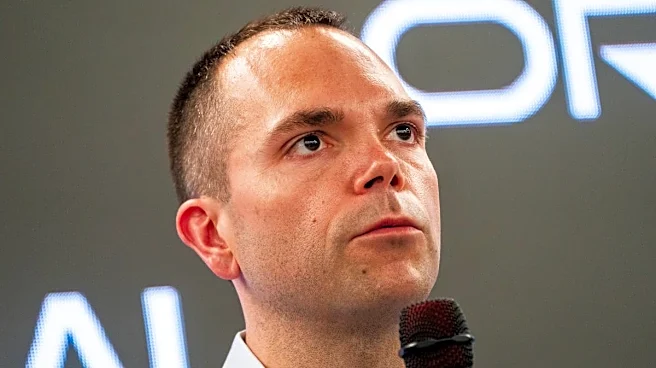
AI researcher Gary Marcus has expressed concerns about the future of tech stocks heavily tied to OpenAI, such as Nvidia, Oracle, and CoreWeave. Marcus highlighted that OpenAI's recent confidential filing for an IPO, coupled with potential price cuts,
could signal financial instability. He noted that OpenAI's significant demand for chips and data centers has been a major revenue source for these companies. However, Marcus warned that if OpenAI's IPO underperforms, it might lead to reduced spending, impacting these tech companies' revenues. He compared OpenAI's situation to WeWork's past financial troubles, suggesting that OpenAI's rapid cash burn and lack of a technical moat could lead to similar challenges.
Why It's Important?
The potential financial instability of OpenAI could have significant repercussions for tech companies that rely on its demand for computing resources. If OpenAI scales back its spending, companies like Nvidia, Oracle, and CoreWeave could face revenue losses. This situation underscores the risks associated with heavy reliance on a single customer for revenue. Additionally, Marcus's comparison to WeWork highlights the broader market implications of overvaluation and unsustainable business models in the tech industry. The outcome of OpenAI's IPO could influence investor confidence and the valuation of tech stocks with similar business dependencies.
What's Next?
If OpenAI's IPO does not meet expectations, it may lead to a reevaluation of tech stocks with high exposure to AI infrastructure demands. Companies might need to diversify their customer base to mitigate risks associated with dependency on OpenAI. Investors and stakeholders will likely monitor OpenAI's financial performance closely, as any significant changes could impact the broader tech market. Additionally, the potential for an AI credit event could prompt lenders to reassess the creditworthiness of AI-linked assets, affecting future investments in the sector.