




What's Happening?
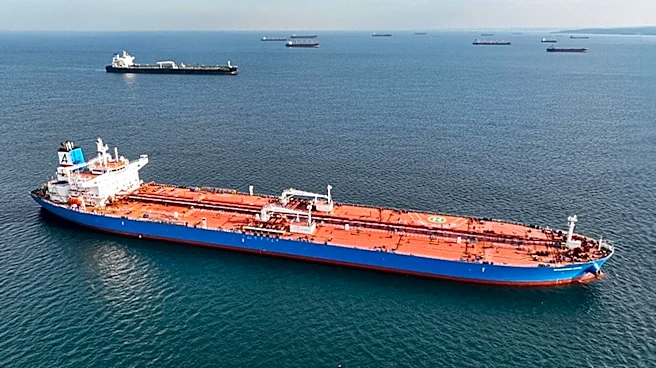
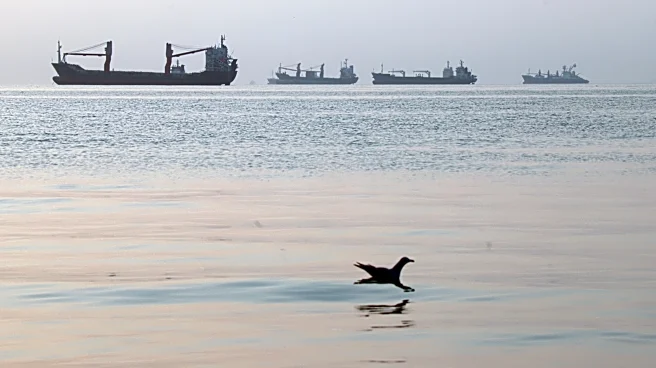
A shortage of tankers in the Gulf region is drawing vessels previously part of the 'dark fleet'—those that transported sanctioned Venezuelan crude—into mainstream oil trade, according to Bloomberg. These tankers are now moving Iraqi barrels, attracted
by lucrative Middle Eastern routes and record-high freight rates. The Centuries, a supertanker boarded by the U.S. Coast Guard in the Caribbean last December for carrying Venezuelan crude, recently loaded Iraqi oil after being chartered by Iraq’s state oil marketer Somo. Other former dark-fleet vessels, such as the Axe, Kelly, Marbella, and Kiara M, are also either already in the Gulf of Oman or en route. This shift occurs as daily earnings for supertankers on Middle East-East Asia routes have surged by over 4,400% this year, with some voyages fetching up to $40 million.
Why It's Important?
The integration of former 'dark fleet' tankers into mainstream oil trade signifies a critical response to a stressed global shipping market and has several implications. While these additional ships may not drastically alter the economics of oil transport, they help alleviate the severe tanker shortage, which has driven freight rates to unprecedented levels. This development is particularly relevant for the U.S. and global energy markets, as it contributes to maintaining the flow of crude oil and potentially stabilizing prices. The U.S. administration has signaled its desire for more carriers in the trade to ease costs, even if it means rehabilitating previously sanctioned or 'dark' vessels. However, the continued threat of attacks on vessels in the region, particularly from Iran, means that freight rates are unlikely to decrease significantly, despite the increased vessel availability. This situation highlights the complex interplay between geopolitical tensions, sanctions, and global supply chain dynamics.
What's Next?
The trend of former 'dark fleet' tankers entering mainstream trade is expected to continue as long as freight rates remain high and the tanker shortage persists. The U.S. government's approach of delisting or licensing these vessels for certain financial transactions suggests a pragmatic shift to prioritize market stability over strict adherence to past sanctions, particularly for vessels not currently involved in illicit activities. However, the ongoing security concerns in the Gulf, including the high number of attacks on ships, will continue to influence shipping routes and insurance costs. The legal challenge by Mercuria against the Baltic Exchange's TD3C benchmark also indicates a broader debate within the industry about how to accurately assess freight rates in a volatile geopolitical environment. The long-term impact will depend on the resolution of regional conflicts and the global demand for oil, which could either sustain or diminish the need for these rehabilitated tankers.
Beyond the Headlines
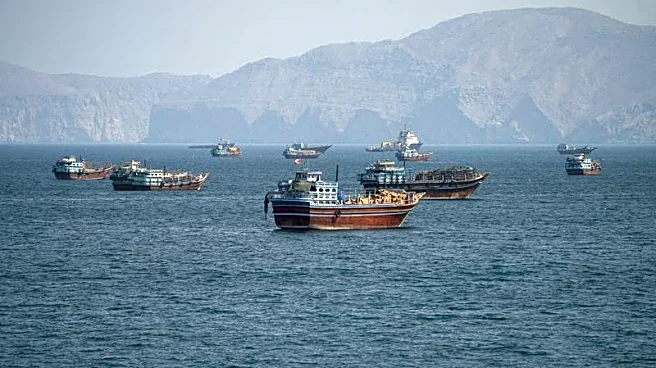
The emergence of the 'dark fleet' into mainstream oil shipping reveals the adaptive and often opaque nature of global commerce in response to sanctions and market pressures. These vessels, operating outside conventional regulatory frameworks, represent a shadow economy that can be quickly brought into the light when economic incentives are strong enough. This phenomenon raises ethical and regulatory questions about the rehabilitation of such vessels and the potential for them to revert to illicit activities if market conditions change. The U.S. Coast Guard's past boarding of the Centuries in the Caribbean underscores the challenges of enforcing sanctions and monitoring maritime traffic. Furthermore, the reliance on 'shuttle tankers' to navigate dangerous areas like the Strait of Hormuz highlights the inherent risks and vulnerabilities in global energy supply chains, where geopolitical tensions can directly impact the cost and reliability of transporting essential commodities. The situation also points to the limitations of sanctions when faced with overwhelming market forces and the need for a flexible approach to global trade policy.