







What's Happening?
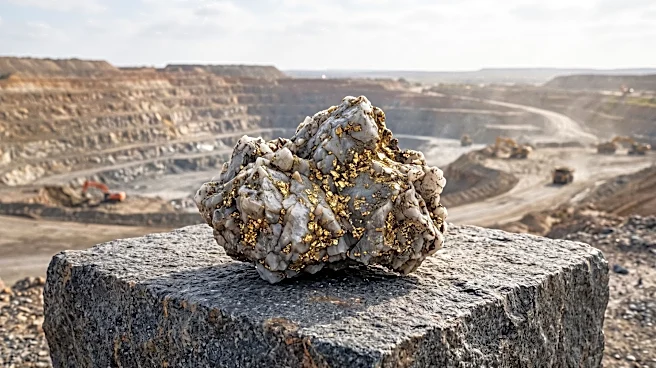
Southern Copper Corporation (NYSE:SCCO) has demonstrated exceptional financial performance, with surging earnings despite flat production volumes. The company's robust margins are attributed to a combination of low unit costs and elevated metal prices
for copper, silver, molybdenum, and zinc. These metals have traded at high levels throughout the year, significantly increasing revenue per tonne shipped. Since most of Southern Copper's cost base is fixed or tied to local inflation, a larger portion of the increased revenue translated directly into higher earnings. Operational factors such as lower ore grades at some sites, scheduled maintenance, pit sequencing, and water management contributed to the flat production volumes. Southern Copper, controlled by Grupo Mexico, operates primarily in Peru and Mexico and possesses some of the largest copper reserves among listed companies.
Why It's Important?
Southern Copper's ability to achieve surging earnings amidst flat production highlights its strong cost management and the favorable market conditions for non-ferrous metals. This performance is crucial for investors, demonstrating the company's resilience and profitability even when production volumes are not increasing. The elevated prices of copper, silver, molybdenum, and zinc reflect strong global demand, driven by industrial growth, technological advancements, and the ongoing energy transition. As a major producer, Southern Copper's profitability directly impacts its capacity for future investments in exploration and development, which are essential for long-term supply stability in critical industries. The company's financial strength also supports its generous dividend policy, benefiting shareholders and reinforcing investor confidence.
What's Next?
Southern Copper's future performance will largely depend on the sustained high prices of non-ferrous metals and the successful execution of its growth projects. The Tía María project in Peru is a key growth initiative, but it faces ongoing community opposition, which the company is addressing through engagement, water supply arrangements, and advanced desalination designs. Delays in construction or ramp-up of new projects could offset the benefits of high metal prices. The company also faces challenges related to political and social conditions in Peru and Mexico, including potential changes in mining royalties, community protests, and tax rules. Southern Copper's management will need to carefully monitor these variables to ensure the smooth progression of its expansion plans and continued profitability.
Beyond the Headlines
The disconnect between flat production and surging earnings at Southern Copper underscores the significant impact of commodity prices on the mining sector's profitability. This situation highlights the inherent volatility and cyclical nature of the industry, where external market forces can sometimes outweigh internal production metrics. The ongoing community opposition to projects like Tía María also brings to light the complex social license to operate that mining companies require. Southern Copper's efforts to address these concerns, such as through advanced water management, reflect a growing industry trend towards more sustainable and socially responsible mining practices. The company's financial structure, with a controlling stock owner receiving most of the cash distributions, also raises questions about governance and minority shareholder protection, which are important considerations for long-term investment and ethical corporate practices.