



What's Happening?
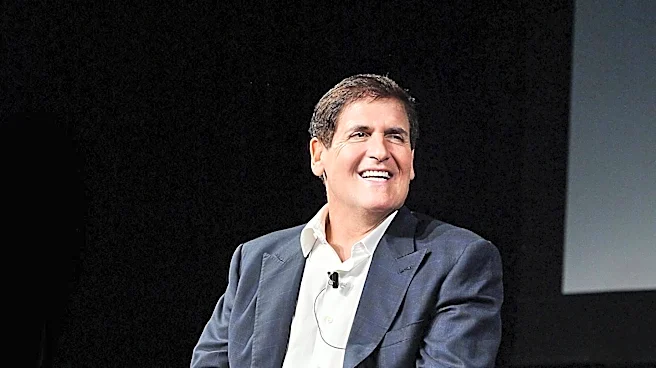
Billionaire entrepreneur Mark Cuban has suggested that the next significant AI application will be job simulators, rather than the currently popular agents, drones, or robots. Cuban's comments come as the labor market faces disruptions due to AI, with
Morgan Stanley economists noting a rise in unemployment rates attributed to AI. Cuban envisions job simulators as tools that allow employees to experience various scenarios, similar to training software used by race car drivers and pilots. This approach aims to bridge the gap between AI's theoretical potential and its practical impact in workplaces, addressing the preparation deficit for AI-augmented roles.
Why It's Important?
Cuban's proposal highlights a critical need for practical AI applications that can generate revenue and justify the substantial investments in AI infrastructure. As AI continues to disrupt the labor market, particularly affecting younger workers, job simulators could provide a solution by preparing employees for AI-enhanced roles. This development is significant for both employers and employees, as it addresses the challenges of adapting to AI-driven changes in job functions. The concept also aligns with broader industry trends, where physical AI and simulation are becoming key areas of value creation.
What's Next?
The implementation of AI job simulators could lead to a shift in how companies train and prepare their workforce for future roles. As AI continues to evolve, businesses may increasingly invest in such technologies to ensure their employees are equipped to handle AI-augmented tasks. This could also influence investment strategies, as the demand for applied AI solutions grows. Companies that successfully integrate job simulators may gain a competitive edge by enhancing their workforce's adaptability and productivity in an AI-driven economy.