




What's Happening?
The U.S. beef industry is undergoing a significant shift with the rapid expansion of 'beef-on-dairy' production, where dairy cows are bred with beef bulls to produce calves for meat. This practice has grown from 50,000 head in 2014 to 3.22 million in 2024,
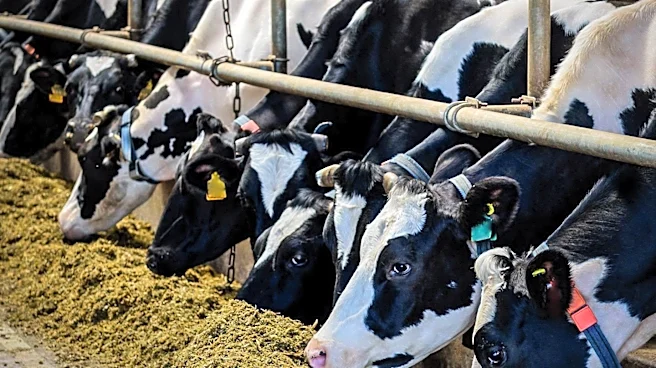
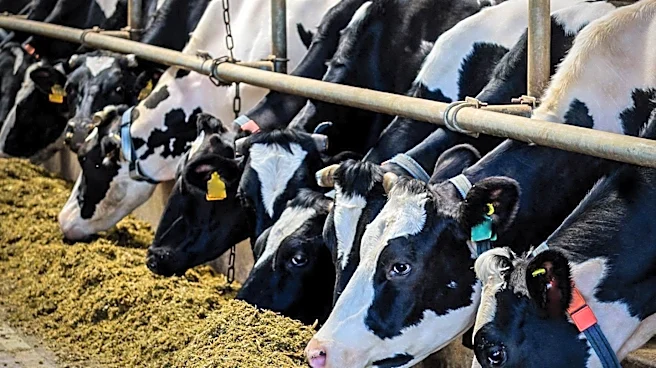
now accounting for an estimated 26% of the feedlot population. This growth is driven by a historic cattle shortage and the dairy industry's financial strain, as beef-on-dairy calves offer a valuable source of profit. However, this model is raising concerns among independent ranchers and animal welfare advocates. Ranchers fear it will lead to the vertical integration of the beef industry, similar to the poultry and pork sectors, eroding their independence and the traditional open cash market for cattle. Animal welfare concerns stem from the confinement model of beef-on-dairy cattle, which often involves early separation from mothers, individual hutches, and grain-heavy diets, leading to health issues like congestive heart failure, lameness, and high rates of liver abscesses.
Why It's Important?
The rise of beef-on-dairy production has profound implications for the U.S. agricultural landscape, particularly for independent ranchers. This shift threatens to consolidate power within the meatpacking industry, potentially leading to a 'chickenization' of beef production where large corporations control the entire supply chain, dictating terms to farmers. This could further marginalize small and medium-sized ranches, which have already seen a significant decline over decades. For consumers, this means a growing likelihood that the beef they purchase comes from animals raised in confined, industrial settings, often without clear labeling to indicate its origin. The animal welfare issues associated with beef-on-dairy, such as increased health problems and confinement, also raise ethical questions about the sustainability and humanity of modern meat production practices, potentially influencing consumer choices and advocacy efforts for more humane animal treatment.
What's Next?
The trajectory of beef-on-dairy production suggests continued growth, with major players like Cargill and Land O'Lakes investing in its expansion. Experts anticipate a move towards a more integrated model, where meatpackers or large feedlots gain greater control over the supply chain, potentially owning calves from birth through slaughter. This could further solidify the vertical integration of the beef industry, challenging the remaining independence of U.S. ranchers. The animal welfare concerns are likely to intensify, potentially leading to increased public scrutiny and calls for stricter regulations or clearer labeling. The industry will face pressure to address these welfare issues, possibly through research into genetic selection and management practices, while independent ranchers and advocacy groups will continue to fight for market fairness and the preservation of traditional ranching methods.
Beyond the Headlines
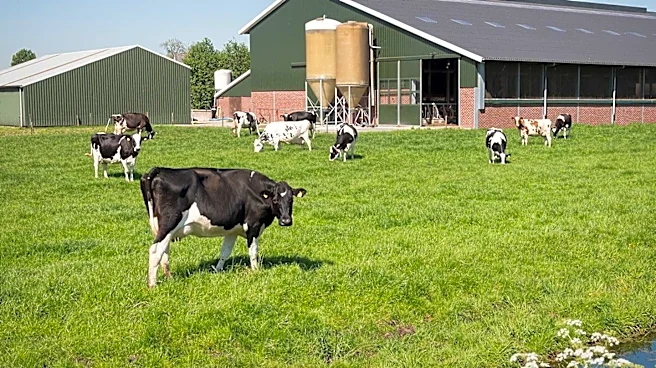
The expansion of beef-on-dairy production highlights a deeper tension between economic efficiency and traditional agricultural values, as well as animal welfare. It represents a significant step towards industrializing the last major holdout of independent animal agriculture in the U.S. The shift away from pasture-raised cattle towards confined, grain-fed systems not only impacts animal health but also has environmental implications, such as increased water usage and manure production, as seen with facilities like Blackshirt Feeders. This development also underscores the power dynamics within the food system, where large corporations can leverage economic pressures and technological advancements to reshape entire industries. The long-term consequences could include a less diverse agricultural landscape, reduced consumer choice for ethically raised meat, and ongoing debates about the true cost of cheap food.