




What's Happening?
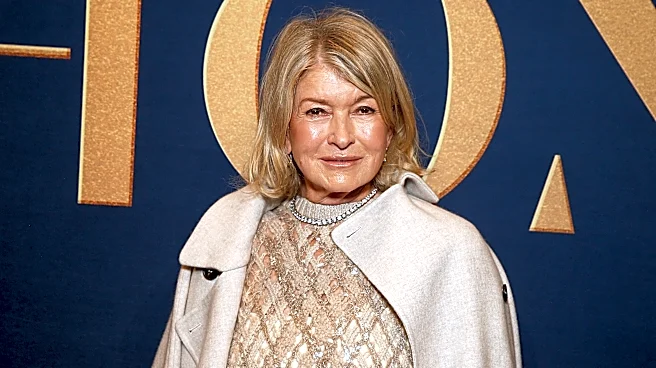
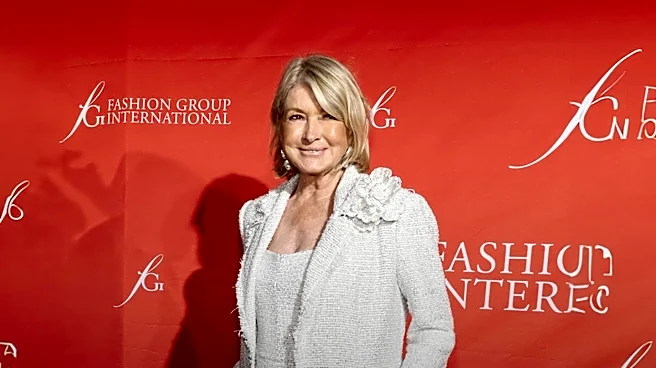
US businesswoman, author, and television host Martha Stewart has drawn significant criticism for her Halloween costume, which depicted a 'homeless person.' The costume, initially shared in a now-deleted Instagram post, featured Stewart in worn-out clothes
with smeared dirt on her face, holding a sign that read, 'I am hungry. Help me!' The image was reportedly part of an Instagram carousel promoting candles. Social media users widely condemned the costume, calling it 'out of touch' and insensitive, particularly given Stewart's estimated net worth of $400 million. In response to the backlash, Stewart issued a statement to Page Six, explaining that her intention was to raise awareness about homelessness in America, a cause she claims to care deeply about and supports through various charities. She expressed distress that her costume had offended people, stating it was never her intention.
Why It's Important?
This incident highlights the ongoing public scrutiny faced by celebrities regarding their social responsibility and the potential for misinterpretation of their actions. Martha Stewart's costume, intended by her to raise awareness, instead sparked outrage, demonstrating a disconnect between intent and public perception. The controversy underscores the sensitivity surrounding issues like homelessness and poverty, particularly when addressed by affluent public figures. For brands and public personalities, this event serves as a cautionary tale about the importance of careful consideration and empathy in public displays, especially during events like Halloween, which can easily be perceived as trivializing serious social issues. The swift and widespread negative reaction on social media indicates a growing expectation from the public for celebrities to be more mindful of their impact and to engage with social issues in a genuinely constructive manner, rather than through potentially offensive portrayals.
What's Next?
The immediate aftermath will likely involve continued public discussion and debate on social media platforms regarding celebrity conduct and the appropriate ways to address social issues. Martha Stewart's statement of apology and explanation may or may not fully quell the criticism, as public opinion on such matters can be deeply divided. Other celebrities and public figures may take note of this incident and exercise greater caution in their own public appearances and costume choices, particularly those that touch upon sensitive societal topics. This event could also prompt further conversations within the entertainment and media industries about the ethical implications of certain creative expressions and the responsibility of public figures to consider the broader societal context of their actions.
Beyond the Headlines
The controversy surrounding Martha Stewart's Halloween costume delves into deeper societal implications concerning wealth disparity and the representation of marginalized communities. The public's strong reaction reflects a broader sentiment that issues like homelessness should not be trivialized or used for entertainment, especially by those in positions of privilege. This incident also touches upon the evolving nature of celebrity culture, where public figures are increasingly held accountable for their actions and statements, often through the rapid dissemination of information and opinion on social media. It raises questions about the effectiveness of 'awareness campaigns' when executed without sufficient sensitivity or understanding of the lived experiences of those being represented. The event underscores the ethical challenge of addressing serious social problems in a way that genuinely fosters empathy and support, rather than inadvertently causing offense or perpetuating stereotypes.