


What's Happening?
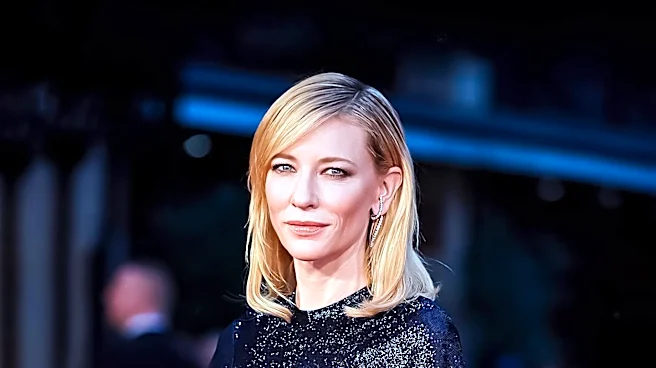
Cate Blanchett has co-founded and leads the Displacement Film Fund (D.F.F.), an initiative established to champion and provide financial support to filmmakers who have been displaced. The fund aims to empower these individuals by enabling them to continue
their work in cinema. The International Film Festival Rotterdam’s Hubert Bals Fund serves as the management partner for the D.F.F. The fund has garnered support from various other partners, including Master Mind, Uniqlo, Droom en Daad, the Tamer Family Foundation, the Amahoro Coalition, the U.N.H.C.R., and the S. P. Lohia Foundation. One of the films supported by the D.F.F. is Shahrbanoo Sadat’s short film, “Super Afghan Gym,” which premiered at the International Film Festival Rotterdam. This film depicts a group of women in Kabul finding community and sisterhood while exercising together behind closed doors.
Why It's Important?
The establishment of the Displacement Film Fund is significant as it addresses a critical need within the global film community: providing resources and opportunities for displaced filmmakers. These artists often face immense challenges, including loss of equipment, funding, and safe environments to create their work. By offering monetary support, the D.F.F. helps preserve diverse voices and narratives that might otherwise be lost due to displacement. This initiative not only fosters artistic expression but also contributes to cultural preservation and understanding by enabling filmmakers to share their unique perspectives and experiences. The involvement of Cate Blanchett, a prominent figure in the entertainment industry, lends considerable visibility and credibility to the fund, potentially attracting more support and awareness for the plight of displaced artists worldwide. The fund's partnerships with international organizations and foundations underscore a collaborative effort to tackle this issue.
What's Next?
The Displacement Film Fund is expected to continue its mission of identifying and supporting displaced filmmakers globally. With its established partnerships and leadership, the fund will likely seek to expand its reach and impact, potentially through further fundraising initiatives and collaborations with film festivals and humanitarian organizations. The success of films like “Super Afghan Gym,” which gained international recognition, could serve as a model and inspiration for future projects supported by the D.F.F. The fund's ongoing efforts will aim to create a sustainable ecosystem where displaced filmmakers can access the necessary resources to produce their art, ensuring their stories are told and their voices are heard on a global stage. Future plans may include workshops, mentorship programs, and distribution assistance to further empower these filmmakers.
Beyond the Headlines
Beyond its immediate financial support, the Displacement Film Fund highlights the broader ethical and cultural responsibilities of the global entertainment industry. It underscores the idea that art and storytelling are crucial for human dignity and resilience, especially for those uprooted from their homes. The fund implicitly challenges the industry to consider how it can better support artists affected by conflict, persecution, and displacement. This initiative also brings attention to the power of film as a tool for social commentary and empathy, allowing audiences to connect with experiences they might not otherwise encounter. By investing in displaced filmmakers, the D.F.F. is not just funding films; it is investing in the preservation of diverse cultural narratives and fostering a more inclusive global cinematic landscape, promoting understanding and dialogue across borders.