
What's Happening?
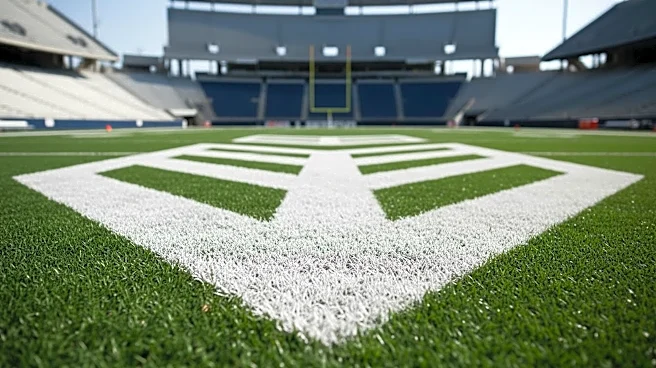
The University of Michigan is set to introduce corporate advertisements inside Michigan Stadium, also known as 'The Big House,' for the first time in its history. This move is part of a new initiative
called the 'Leaders and Best Champion Partners Program.' The university has secured agreements with major brands including Coca-Cola, Meijer, and Google Gemini. These advertisements will be displayed on the walls surrounding the field and on both sides of the videoboards located on the north and south ends of the stadium. The program also includes provisions for on-field and stadium-based branding, scoreboard integrations, end zone placements, and digital and in-game sponsorship activations. All advertising will adhere to a uniform color scheme of maize, blue, or white to maintain a clean aesthetic. This decision comes as the university seeks to generate additional revenue for its athletic department, particularly in response to rising expenses related to Name, Image, and Likeness (NIL) costs for student-athletes. The athletic director, Warde Manuel, stated that this is an evolution to strengthen Michigan Athletics' ability to remain a national leader and compete for championships.
Why It's Important?
This decision by the University of Michigan marks a significant shift in college sports commercialization, particularly for an institution known for its traditional approach to stadium branding. The introduction of advertisements in Michigan Stadium, a venue that has largely avoided internal commercialization, reflects the increasing financial pressures and evolving landscape of collegiate athletics. The rising costs associated with NIL deals, which for the football program alone are estimated to be between $35-40 million for the 2026-27 season, necessitate new revenue streams. By partnering with major corporations, Michigan Athletics aims to secure substantial financial investment that will directly support its student-athletes and help maintain a competitive edge. This move could set a precedent for other traditional college sports programs that have historically resisted extensive commercialization, potentially leading to a broader acceptance of in-stadium advertising across the NCAA. The success of this program could influence how other universities balance tradition with the financial demands of modern college sports, impacting revenue generation models and the overall fan experience.
What's Next?
The advertisements from Coca-Cola, Meijer, and Google Gemini are expected to be visible inside Michigan Stadium as the 2026-27 season commences. The university will be closely monitoring the implementation of the 'Leaders and Best Champion Partners Program' to ensure that the branding is strategic, tasteful, and aligns with the values of the University of Michigan. Further explorations are underway regarding additional premium assets, including the potential for jersey patches, which could generate even more significant revenue. The financial impact of these new partnerships will be crucial in addressing the escalating costs of athletic programs, particularly the substantial NIL budget for football. Other universities and athletic departments will likely observe Michigan's experience to gauge the effectiveness and fan reception of such commercialization efforts. The ongoing evolution of revenue-sharing and NIL landscapes will continue to drive universities to seek innovative ways to fund their athletic programs, potentially leading to more widespread adoption of similar advertising models across college sports.
Beyond the Headlines
The decision to introduce advertisements in Michigan Stadium goes beyond mere financial considerations; it represents a cultural shift in college athletics. For decades, 'The Big House' has been a symbol of collegiate tradition, largely free from overt corporate branding. This move signifies a pragmatic acknowledgment that the financial realities of modern college sports, driven by escalating NIL costs and the pursuit of championship success, necessitate a reevaluation of long-held traditions. The careful consideration given to the aesthetic integration of advertisements, using uniform colors, highlights an attempt to balance commercialization with the preservation of the stadium's iconic identity. This development raises questions about the future of tradition in college sports and how institutions will navigate the tension between commercial interests and historical values. It also underscores the increasing professionalization of college athletics, where student-athletes are now significant economic stakeholders, and universities are operating more like professional sports franchises in their pursuit of revenue and talent. The long-term implications could include a more commercialized fan experience and a redefinition of what constitutes 'amateur' athletics.