







What's Happening?
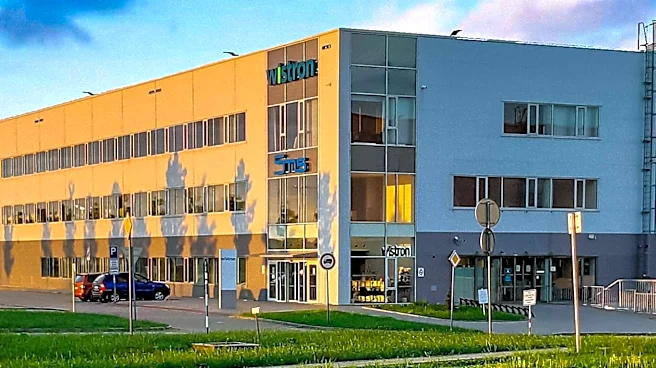
Shares of Taiwan's Wistron Corporation, a key supplier for Nvidia, experienced a decline of over 6% on Tuesday. This drop occurred after the company announced the pricing of a $1.47 billion global depositary receipt (GDR) offering. The offering involves
25 million GDRs, priced at $58.88 each, which represent 250 million new common shares. This pricing reflects approximately a 5.5% discount to Wistron's closing price on Monday. The new shares constitute about 7.29% of Wistron's outstanding shares before the issuance. The proceeds from this offering are specifically earmarked for the purchase of raw materials in foreign currencies. This fundraising initiative aligns with Wistron's ongoing expansion of its AI server business, which includes significant capacity investments in both Taiwan and the U.S. The company recently approved NT$10.5 billion in additional capital expenditure for facilities in Taiwan and a combined $53 million for two U.S. subsidiaries to support future AI business growth.
Why It's Important?
This event is significant for the U.S. technology and manufacturing sectors, particularly in the context of the burgeoning artificial intelligence industry. Wistron's decision to raise capital through a GDR offering, despite a subsequent share price drop, underscores the substantial investment required to scale AI server production. As a crucial supplier for Nvidia, Wistron's expansion directly impacts the availability and cost of AI infrastructure in the U.S. The allocation of $53 million for U.S. subsidiaries and the establishment of a $700 million AI server plant in Fort Worth, Texas, highlight the increasing localization of AI hardware manufacturing within the United States. This move aims to strengthen domestic supply chains, reduce reliance on overseas production, and potentially create jobs in the U.S. The funding for raw material purchases is critical for maintaining production momentum and meeting the high demand for advanced AI systems like Nvidia's GB300 Grace Blackwell Ultra systems and the upcoming Vera Rubin platform. The share price reaction, while negative in the short term, reflects market adjustments to dilution and financing strategies rather than a fundamental shift in AI demand.
What's Next?
Wistron's GDR offering is expected to be issued on Thursday, with the proceeds immediately directed towards raw material procurement. This will enable the company to continue its aggressive expansion in the AI server market, particularly in its U.S. operations. The Fort Worth, Texas, facility is anticipated to increase its production capabilities, including the manufacturing of next-generation AI platforms. The market will closely watch Wistron's ability to effectively utilize the raised capital to scale production and meet the growing demand from companies like Nvidia. The success of these expansion efforts could further solidify the U.S. as a hub for AI hardware manufacturing. Investors will also be monitoring Wistron's financial performance in subsequent quarters to assess the impact of these investments and the overall profitability of its AI server business. The company's stock performance will likely be influenced by its ability to demonstrate strong growth and efficient capital deployment in the coming months.
Beyond the Headlines
The financing strategy employed by Wistron, a major player in the AI supply chain, reveals deeper trends within the global technology landscape. The decision to raise capital through GDRs, even at a discount, highlights the intense pressure on hardware manufacturers to rapidly scale production to meet the insatiable demand for AI infrastructure. This urgency often necessitates immediate capital injections, sometimes at the expense of short-term stock performance. Furthermore, Wistron's significant investments in U.S. manufacturing facilities, such as the Fort Worth plant, signal a broader strategic realignment in global supply chains. Companies are increasingly diversifying their manufacturing footprints to mitigate geopolitical risks, enhance resilience, and potentially capitalize on incentives for domestic production. This trend could lead to a more distributed and robust global tech manufacturing ecosystem, but also presents challenges related to labor, logistics, and regulatory compliance in new regions. The long-term implications include a potential shift in the economic geography of high-tech manufacturing and increased competition for skilled labor in these emerging hubs.