





What's Happening?
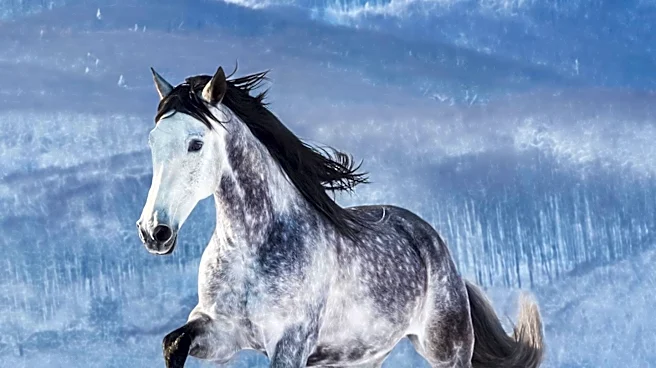
As winter approaches, horse farms in Lexington, Kentucky, are preparing for colder temperatures by implementing specific care routines to ensure the well-being of their animals. Ashley Watts, owner of Liftoff Equestrian, detailed several key practices.
These include blanketing horses, especially those that are clipped for show purposes, as their natural coat protection is reduced. Heated water buckets are used in stalls and troughs to prevent water from freezing and to encourage horses to drink, as they prefer warmer water. Additionally, horses receive extra feed during winter months to compensate for the increased calorie burn required to maintain body temperature, particularly when fresh grass is unavailable for grazing. These measures ensure horses remain warm, hydrated, and at a healthy weight throughout the colder season.
Why It's Important?
The specialized winter care for horses in Kentucky's horse farms is crucial for the health and welfare of these valuable animals. Proper care prevents cold-related illnesses, dehydration, and weight loss, which can have significant economic impacts on the equine industry. Kentucky is a major center for horse breeding and racing, and maintaining the health of these animals is vital for the industry's productivity and reputation. The practices highlighted demonstrate a commitment to animal husbandry and the professional standards required to manage livestock in varying climatic conditions. This attention to detail ensures the continued vitality of Kentucky's horse industry.
What's Next?
As winter progresses, horse farms will continue to monitor weather conditions closely and adjust care routines as needed, particularly during periods of extreme cold, snow, or ice. This may involve further adjustments to blanketing, feeding schedules, and ensuring safe, clear pathways for horses. Farm staff will remain vigilant for any signs of discomfort or illness in the horses. Beyond the immediate winter season, these established practices will inform future winter preparations, ensuring that farms are consistently equipped to handle cold weather challenges and maintain high standards of animal care.
Beyond the Headlines
The detailed winter care routines on Kentucky horse farms reflect a deeper understanding of animal physiology and welfare. It highlights the significant investment of time, resources, and expertise required to maintain large animals in a managed environment. Ethically, these practices underscore a commitment to responsible animal stewardship, ensuring that the animals under human care are protected from environmental stressors. Economically, the health of these horses directly impacts the multi-billion dollar equine industry, influencing breeding success, racing performance, and overall market value. This specialized care is a testament to the dedication within the industry to uphold the highest standards of animal welfare, which is also a key factor in public perception and the sustainability of the industry.