


What's Happening?
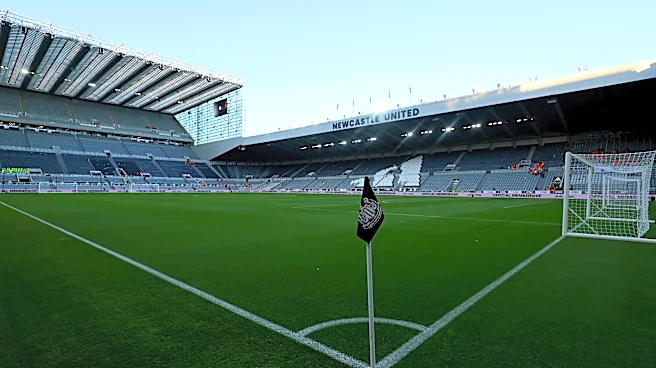
Newcastle United's Sporting Director, Ross Wilson, is facing increased scrutiny regarding his transfer dealings after the club's mixed start to the 2026-27 Premier League season. Chairman Yasir Al-Rumayyan was present at St James' Park for the 2-2 draw
against Arsenal, witnessing firsthand the team's performance. Wilson was given control over transfer policy ahead of summer 2026, leading to the sale of key players such as Anthony Gordon, Sandro Tonali, and Bruno Guimaraes, and the non-renewal of contracts for older players like Kieran Trippier. Approximately £260m-£270m was committed to new signings. However, many of these new players, including Amar Dedic and Sean Steur, were substituted at halftime against Arsenal, while others like Nico Gonzalez and Matias Fernandez-Pardo were unused substitutes, and some were not even in the matchday squad. This has left head coach Matthias Jaissle relying heavily on players who were at the club before Wilson's summer overhaul.
Why It's Important?
The transfer strategy implemented by Sporting Director Ross Wilson represents a significant shift in how Newcastle United manages its squad, moving control from the head coach to a dedicated Sporting Director. This model, while common in modern football, is now being tested by the team's performance. The substantial investment in new players and the decision to offload established talent indicate a long-term rebuilding project. However, the immediate challenge is the integration of these new signings and their ability to perform at the Premier League level. If the new players struggle to adapt or consistently contribute, it could undermine the club's short-term ambitions and place pressure on both Wilson and head coach Jaissle. The reliance on the 'old guard' for crucial performances, as seen in the second half against Arsenal, suggests that the new squad is not yet fully equipped to carry the team, highlighting the risks associated with such a comprehensive overhaul.
What's Next?
The immediate future for Newcastle United involves a critical period of assessment for Ross Wilson's transfer decisions. Head coach Matthias Jaissle will need to find a way to maximize the potential of the new signings while also ensuring the team achieves consistent results. The performance of players like Lukas Hornicek, Sean Steur, and Amar Dedic, who were brought in by Wilson, will be closely watched as the season progresses. The club's ability to climb the Premier League table will largely depend on how quickly these new players can integrate and perform. If the team continues to struggle, it could lead to further questions about the efficacy of the transfer policy and potentially impact the roles of both the Sporting Director and the head coach. The coming months will be crucial in determining whether Wilson's long-term vision for the squad can translate into immediate on-field success.
Beyond the Headlines
This situation at Newcastle United underscores the inherent tension between a Sporting Director's strategic, long-term vision for squad building and a head coach's immediate need for a competitive team. While a Sporting Director model aims for stability and a consistent club philosophy, it can create challenges if the players acquired do not fit the coach's tactical needs or fail to perform quickly. The significant financial outlay by the PIF through Wilson's transfers also highlights the pressure to deliver returns on investment, both in terms of on-field success and brand value. The case of Newcastle will serve as an important example of the complexities involved in implementing a top-down transfer strategy in a high-stakes league, where the balance between rebuilding for the future and competing in the present is constantly under scrutiny. The success or failure of this approach could influence similar strategies at other clubs with significant external investment.