



What's Happening?
Zara has released a faux fur peplum jacket, which is quickly gaining popularity and selling out. This item combines two significant emerging trends for the autumn/winter season: the return of the peplum silhouette, which was prominent in the 2010s, and the widespread
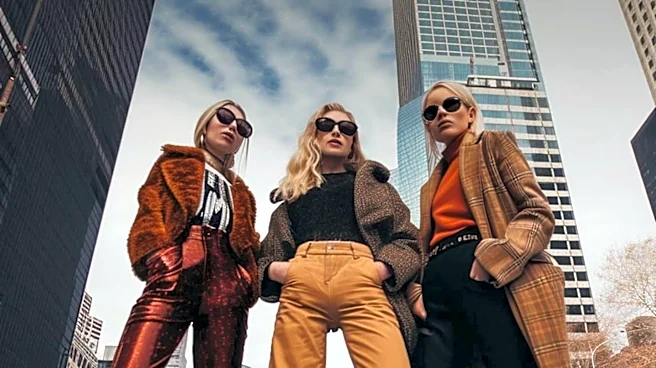
appearance of faux fur on recent runways. The jacket features a teddy bear-esque texture, a round neck, long sleeves, and contrasting dark buttons against a neutral beige hue. Its flared peplum hem is designed to provide a flattering and sculpted silhouette, while the faux fur element adds a touch of glamour and warmth. This piece is being highlighted as a key item for those looking to incorporate current seasonal trends into their wardrobes, suitable for both casual wear with jeans and ankle boots, and as a cover-up for party occasions.
Why It's Important?
The rapid popularity and sell-out status of Zara's faux fur peplum jacket indicate a strong consumer appetite for these re-emerging fashion trends. The return of the peplum silhouette suggests a cyclical nature in fashion, where styles from previous decades are reinterpreted for contemporary tastes. The prominence of faux fur aligns with growing consumer demand for ethical and sustainable alternatives to real fur, reflecting broader societal shifts towards conscious consumption. For the fashion industry, this signals that investing in these trends, particularly in accessible forms like those offered by Zara, can be highly profitable. Other retailers may follow suit, leading to a wider availability of peplum and faux fur items across various price points, influencing seasonal collections and marketing strategies.
What's Next?
Given the strong reception of Zara's faux fur peplum jacket, it is highly probable that other fashion brands will introduce similar peplum-style garments and faux fur outerwear in their upcoming collections. We can expect to see the peplum silhouette applied to a wider range of clothing items, including tops, dresses, and skirts, as designers explore variations of the trend. Similarly, faux fur is likely to remain a dominant material for coats, jackets, and accessories throughout the colder seasons. This trend could also influence textile manufacturers to innovate in creating more realistic and sustainable faux fur options. Consumers can anticipate a diverse array of choices in these styles, catering to different preferences and budgets, as the market responds to this demonstrated demand.
Beyond the Headlines
The resurgence of the peplum trend, often associated with a more structured and feminine aesthetic, could reflect a broader cultural shift in fashion preferences, possibly moving away from more minimalist or oversized styles. Its return might also be linked to a desire for more defined silhouettes that offer a sense of elegance and polish. The continued dominance of faux fur not only highlights ethical considerations in fashion but also points to advancements in material science, making faux alternatives increasingly appealing in terms of texture and appearance. This trend also underscores the influence of fast fashion retailers like Zara in democratizing high-fashion trends, making them accessible to a mass market and accelerating their adoption. The combination of nostalgia for past styles and contemporary ethical concerns shapes the current fashion landscape.