
What's Happening?
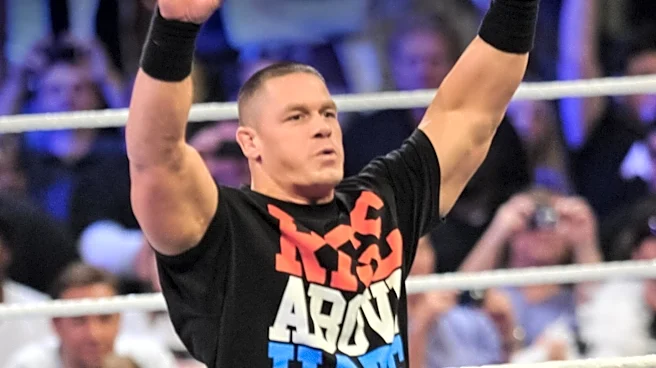
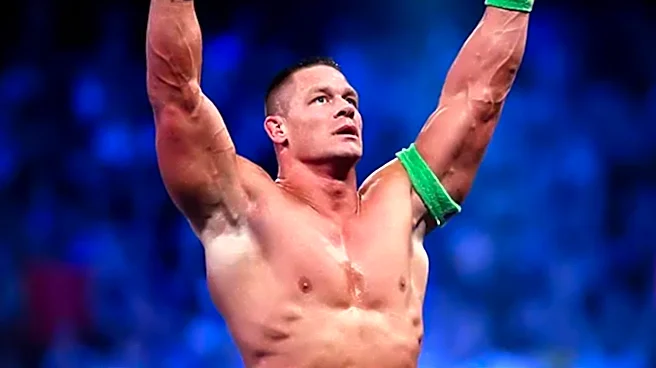
WWE legend John Cena has expressed his gratitude for being referenced in Drake's latest track, 'Quebec.' Drake, who has previously included Cena in his lyrics, raps, 'Chrome belt, look like John Cena in here,'
on the song. 'Quebec' was initially premiered in Drake's 'FOMO' short film in September and later released on streaming services as part of the 'HABIBTI (FOMO)' deluxe album in October. Cena, during an appearance on The Morning Show, reflected on his own past in the hip-hop industry, having released a platinum-certified rap album titled 'You Can't See Me' in 2005. He acknowledged the effort required to craft meaningful lyrics and music, stating he was 'super grateful' for Drake's recognition. Cena also noted his deep ties to hip-hop, including taking inspiration for his signature 'you can't see me' hand gesture from G-Unit's Tony Yayo.
Why It's Important?
This interaction highlights the significant crossover appeal and cultural impact of figures like John Cena and Drake, bridging the worlds of professional wrestling, music, and broader pop culture. For Cena, being referenced by a globally recognized artist like Drake reinforces his enduring relevance and iconic status beyond his wrestling career. It also underscores the power of hip-hop as a medium for cultural commentary and recognition, where artists frequently draw from diverse sources to enrich their lyrical content. For Drake, incorporating such references adds layers of relatability and cultural currency to his music, resonating with a wide audience familiar with both his work and Cena's. This phenomenon demonstrates how public figures can transcend their primary fields to become symbols within the collective consciousness, influencing and being influenced by various forms of media and entertainment.
What's Next?
The continued cross-pollination between different entertainment industries, such as music and sports entertainment, is likely to persist. Artists like Drake will continue to draw inspiration from popular culture, including figures like John Cena, to create relatable and engaging content. For John Cena, such shoutouts further solidify his status as a pop culture icon, potentially opening doors for more diverse roles and appearances outside of wrestling and acting. This kind of mutual recognition can also lead to increased fan engagement across different demographics, as followers of one artist or personality discover the work of another. The ongoing evolution of social media and digital platforms will likely amplify these cultural connections, making it easier for such references to gain widespread attention and discussion.
Beyond the Headlines
The phenomenon of cultural references, like Drake's mention of John Cena, speaks to a deeper aspect of how collective identity and shared experiences are formed in modern society. These references act as shorthand, instantly recognizable to a broad audience, and contribute to a shared cultural lexicon. They reflect the pervasive influence of media and celebrity, where individuals become symbols that transcend their original context. This also touches upon the concept of 'cultural capital,' where being referenced by influential figures can enhance one's own cultural standing and visibility. Furthermore, it highlights the cyclical nature of influence, where Cena, who was inspired by hip-hop for his own rap career, is now being celebrated within the genre. This continuous exchange enriches the cultural landscape, creating a tapestry of interconnected references that resonate with diverse audiences.