






What's Happening?
Dezeen, a prominent design publication, has compiled ten living room design ideas from its extensive archive of over 350 lookbooks published since 2020. This compilation serves as a practical guide for individuals looking to design or update their living spaces.
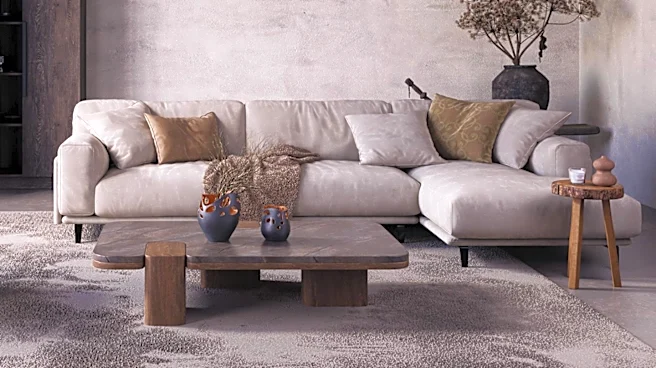
Key trends featured include the 'Japandi' aesthetic, which blends Japanese and Scandinavian minimalism with natural materials, exemplified by a Tokyo home designed by Norm Architects and Keiji Ashizawa Design. The importance of adequate storage is also emphasized, showcasing integrated and stylish solutions like custom shelving and units that double as room dividers, as seen in a renovated New York factory by Ravi Raj and Evan Watts. Other suggestions include using oversized sofas as focal points, incorporating sculptural coffee tables, and utilizing versatile paper lamps for warm lighting. The article also recommends eye-catching rugs to define zones, suspended fireplaces for unique focal points, and autumnal color palettes for a cozy ambiance. Low-slung furniture is suggested for a relaxed atmosphere, and the unconventional conversation pit is presented as a way to create intimacy.
Why It's Important?
This curated collection of living room design trends is significant for U.S. homeowners, interior designers, and the furniture industry. It provides actionable insights into current aesthetic preferences and functional needs in residential design. The emphasis on multifunctional furniture and smart storage solutions, driven by urbanization and smaller living spaces, reflects a broader shift in consumer demand. The 'Japandi' style, with its focus on minimalism and natural elements, aligns with growing consumer interest in sustainable and calming home environments. For the furniture and home decor sectors, these trends indicate areas for product development and marketing. Designers can leverage these ideas to create more appealing and functional spaces, while consumers gain inspiration for personalizing their homes. The inclusion of diverse design elements, from bold statement pieces like oversized sofas to subtle touches like paper lamps, caters to a wide range of tastes and budgets, influencing purchasing decisions and design choices across the U.S. market.
What's Next?
The continued influence of design publications like Dezeen suggests that these trends will likely gain further traction in the U.S. interior design market. We can anticipate an increase in demand for furniture and decor items that align with the 'Japandi' aesthetic, such as minimalist wood furniture and neutral-toned textiles. Manufacturers may respond by producing more integrated storage solutions and modular furniture designed for smaller urban dwellings. Retailers are likely to feature these trends in their showrooms and marketing campaigns, making them more accessible to the average consumer. Furthermore, the emphasis on unique focal points like sculptural coffee tables and suspended fireplaces could drive innovation in the design and manufacturing of these specialized home elements. Interior designers will likely incorporate these concepts into their client projects, further solidifying their presence in contemporary U.S. home design. The growing interest in creating cozy and functional living spaces will continue to shape product offerings and design philosophies.
Beyond the Headlines
Beyond the immediate design trends, this compilation reflects deeper societal shifts in how Americans view and utilize their living spaces. The move towards minimalism and natural materials, as seen in the 'Japandi' style, can be interpreted as a desire for tranquility and simplicity in an increasingly complex world. The focus on efficient storage and multifunctional furniture highlights the ongoing challenge of maximizing space in urban environments, pointing to evolving living patterns and housing market dynamics. The resurgence of elements like conversation pits, while unconventional, suggests a longing for more intimate and communal living experiences, potentially as a counter-response to increasingly digital and isolated lifestyles. These design choices are not merely aesthetic; they are indicative of broader cultural values, environmental consciousness, and the psychological need for comfort and functionality within the home. The adoption of these trends could lead to more thoughtful consumption patterns and a greater appreciation for well-designed, sustainable living environments.