







What's Happening?
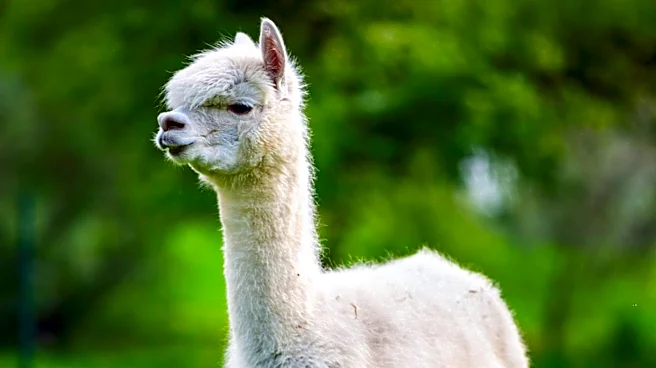
Ocean Breeze Alpacas, located near Berlin, Maryland, operates as a sustainable agritourism model on the Eastern Shore. Founded by Nancy Taylor, the farm focuses on raising alpacas for their fleece, which is then processed into yarn and handmade fiber
products. Taylor, who initially pursued knitting as a hobby, has successfully transformed her passion into a business. The farm's operations include an annual alpaca shearing to harvest the raw fleece. Marina Kain joined the farm, contributing her skills in spinning, weaving, and creating handmade fiber products, which has significantly boosted the business. Ocean Breeze Alpacas features a farm store stocked with hand-knitted goods made by local community members, yarn from their own alpacas, and other commercial alpaca products. The store is open every Saturday from 11:00 AM to 4:00 PM, with options for visits outside these hours by appointment.
Why It's Important?
Ocean Breeze Alpacas serves as a compelling example of how agritourism can foster sustainable economic development in rural U.S. communities. By integrating animal husbandry with direct-to-consumer sales and visitor experiences, the farm creates multiple revenue streams, enhancing its financial viability. This model supports local craftsmanship and provides employment opportunities, contributing to the economic well-being of the Eastern Shore. Furthermore, the emphasis on sustainable practices, such as utilizing alpaca fleece for yarn, aligns with growing consumer demand for ethically sourced and environmentally friendly products. This approach not only benefits the farm owners but also educates visitors about sustainable agriculture and the value of natural fibers, potentially inspiring similar ventures and strengthening the regional agritourism sector.
What's Next?
The success of Ocean Breeze Alpacas could encourage other small farms in Maryland and beyond to explore niche agritourism opportunities, particularly those centered around unique livestock or specialized agricultural products. The farm's model of combining animal care, product creation, and direct sales offers a blueprint for diversification. Future developments might include expanding their product lines, hosting workshops on fiber arts, or collaborating with other local businesses to create broader agritourism packages. The farm's ability to attract visitors and generate income through its store and interactive experiences suggests a growing market for authentic, farm-based tourism. This could lead to increased investment in agritourism infrastructure and marketing efforts across the region, further solidifying its role in the local economy.
Beyond the Headlines
The story of Ocean Breeze Alpacas highlights a broader cultural shift towards valuing artisanal products and direct connections to producers. In an increasingly industrialized world, consumers are seeking experiences that offer transparency, authenticity, and a sense of connection to the land and its resources. Agritourism ventures like this tap into this desire, providing not just goods but also educational and recreational experiences. This model contributes to the preservation of traditional farming skills and crafts, ensuring that knowledge of fiber processing and animal husbandry is passed down. Moreover, it fosters a sense of community by involving local artisans and providing a gathering place for visitors. The farm's success underscores the potential for small-scale, specialized agriculture to thrive by embracing innovative business models that cater to evolving consumer preferences and promote sustainable living.