
What's Happening?
Queen released the live album 'A Night at the Odeon' on November 20, 2015. This album captures their Christmas Eve concert from December 24, 1975, at London's Hammersmith Odeon, which was originally broadcast
on television. The release includes the full audio of the concert, notably preserving an encore that was not part of the television broadcast. The setlist featured songs from their early records, including 'Now I'm Here,' 'Ogre Battle,' and 'White Queen (As It Began),' with the latter two from their 'Queen II' album. 'Bohemian Rhapsody' was performed as part of a medley with 'Killer Queen' and 'The March of the Black Queen,' an arrangement chosen to adapt the song's complex studio vocals for a live setting. The original multitrack tapes for this concert were believed lost but were recovered in 2009 and subsequently restored by Queen's engineering team, allowing for this dedicated commercial release after decades of unofficial circulation.
Why It's Important?
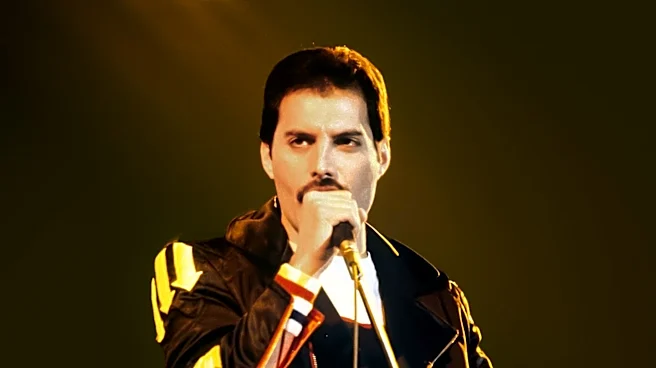
The release of 'A Night at the Odeon' is significant for Queen fans and music historians as it provides a high-quality, official record of a pivotal moment in the band's early career. The 1975 Christmas Eve concert occurred at the height of their 'A Night at the Opera' tour, showcasing their burgeoning talent and stage presence. The recovery and restoration of the original multitrack tapes ensure that this historical performance is preserved with optimal sound quality, offering a definitive version of a concert previously known through broadcasts and unofficial recordings. This release allows a deeper appreciation of Queen's live artistry and their innovative approach to performing complex studio material on stage, particularly with 'Bohemian Rhapsody.' It also highlights the band's early stage aesthetics, such as Freddie Mercury's white satin catsuit and Brian May's Zandra Rhodes stagewear.
What's Next?
While the album was released in 2015, its continued availability ensures that new generations of fans can experience Queen's early live performances. The meticulous restoration process sets a precedent for how historical musical archives can be brought to light. The album's success reinforces the enduring legacy of Queen and the continued demand for their music, both studio and live. Future archival releases from other artists might draw inspiration from the comprehensive approach taken with 'A Night at the Odeon,' including the recovery of lost tapes and the inclusion of previously unreleased material like the audio-only encores. This release contributes to the ongoing narrative of Queen's impact on rock music and their evolution as live performers.
Beyond the Headlines
Beyond its commercial success, 'A Night at the Odeon' offers a glimpse into the challenges and creative solutions involved in translating elaborate studio productions to the live stage in the 1970s. The band's decision to perform 'Bohemian Rhapsody' as a medley, rather than attempting to replicate its operatic vocals live, demonstrates their pragmatic artistry and commitment to delivering an engaging performance within technical limitations. The story of the lost and recovered multitrack tapes also underscores the fragility of cultural heritage and the importance of archival efforts in preserving artistic works. The concert's dual nature as a television broadcast and a live performance highlights the evolving relationship between music, media, and audience engagement during that era, showcasing how bands adapted to different platforms to reach a wider public.