





What's Happening?
A recent study conducted by the Center for the Built Environment at the University of California, Berkeley, and the University of Sydney, in collaboration with Big Ass Fans, has demonstrated that industrial fans can make factory workers feel 10°F cooler
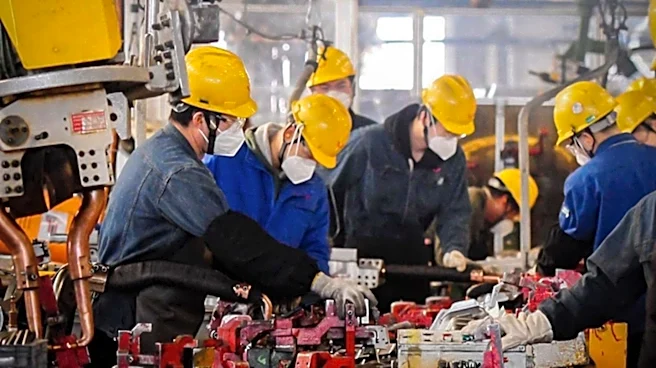
in unconditioned spaces. The research, which monitored 30 factory workers in Baton Rouge, Louisiana, found that when industrial fans were operating, workers reported conditions comparable to working in an environment 10°F cooler. Additionally, 79% of workers felt more effective at their jobs with active industrial air movement, and 100% considered the fans important for their workplace. This study highlights the 'Heat Tax,' an operational drain caused by high temperatures in industrial settings.
Why It's Important?
This study is important for U.S. industries, particularly manufacturing and logistics, where many facilities lack full-building air conditioning. The findings suggest a cost-effective solution to mitigate the 'Heat Tax,' which impacts worker judgment, lowers output, and increases turnover. By improving worker comfort and perceived effectiveness, industrial fans can lead to significant gains in productivity and employee well-being. This can translate into reduced operational costs, fewer heat-related incidents, and improved retention rates for businesses. The research also provides a scientific basis for investing in targeted air movement solutions as an alternative to expensive full-building HVAC systems, especially in large open plants where conventional air conditioning is impractical.
What's Next?
The findings of this study are likely to encourage more industrial facilities in the U.S. to adopt or expand the use of industrial fans to improve working conditions. Manufacturers of industrial fans may see increased demand for their products, leading to further innovation in air movement technology. Businesses will likely evaluate the cost-benefit of implementing such solutions, considering the potential for increased productivity and reduced employee discomfort. Further research may explore the long-term health benefits and economic impacts of improved thermal comfort in various industrial settings, potentially influencing workplace safety regulations and industry best practices.
Beyond the Headlines
Beyond the immediate benefits of improved worker comfort and productivity, this study touches upon broader implications for labor practices and environmental sustainability. In an era of rising global temperatures, finding energy-efficient ways to maintain comfortable working environments is crucial. Industrial fans, operating on significantly less energy than conventional air conditioning, offer a sustainable solution for mitigating heat stress in workplaces. This approach not only protects worker well-being but also aligns with corporate social responsibility goals by reducing energy consumption and carbon footprint. The study also underscores the value of field research in active manufacturing environments, providing practical insights that can drive real-world improvements in industrial operations.