








What's Happening?
The U.S. dollar has maintained its strength as traders anticipate a more hawkish Federal Reserve stance, despite recent fluctuations in oil prices. The dollar's firm position is supported by elevated U.S. Treasury yields, particularly on 2-year notes,
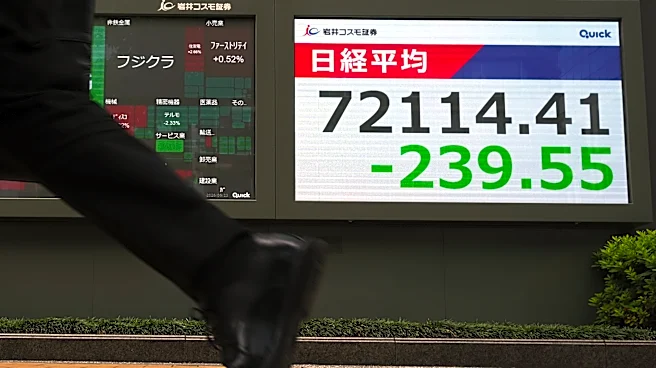
which are near a 16-month high. This comes as market participants brace for potential rate hikes later this year. Fed funds futures indicate a 75% probability of a rate hike by September, with major financial institutions like BofA Global Research and Deutsche Bank revising their forecasts to expect rate increases within the year. The yen, meanwhile, is nearing a 40-year low, prompting discussions between Japanese and U.S. financial authorities about possible interventions to stabilize the currency.
Why It's Important?
The Federal Reserve's shift towards a more hawkish monetary policy has significant implications for global financial markets. A stronger dollar can impact international trade by making U.S. exports more expensive and imports cheaper, potentially affecting the trade balance. Additionally, higher interest rates could slow down economic growth by increasing borrowing costs for businesses and consumers. The yen's weakness poses challenges for Japan, as it could lead to increased import costs and inflationary pressures. The potential for currency intervention by Japanese authorities highlights the delicate balance central banks must maintain in managing exchange rates and economic stability.
What's Next?
Market participants will closely monitor upcoming Federal Reserve meetings for further guidance on interest rate policies. Any official announcements or hints regarding rate hikes could lead to increased market volatility. In Japan, financial authorities may consider direct intervention in the currency markets if the yen continues to weaken, although such actions are typically seen as temporary measures. The ongoing discussions between Japanese and U.S. officials suggest that coordinated efforts may be explored to address currency fluctuations. Traders and investors will also keep an eye on oil price movements, as they can influence currency valuations and economic forecasts.