




What's Happening?
Kelly Tomblin, President and Chief Executive Officer of El Paso Electric (EPE), has announced her retirement from the utility, effective November 9. She will be succeeded by Eliecer 'Eli' Viamontes, who previously served as CEO and chairman of Entergy
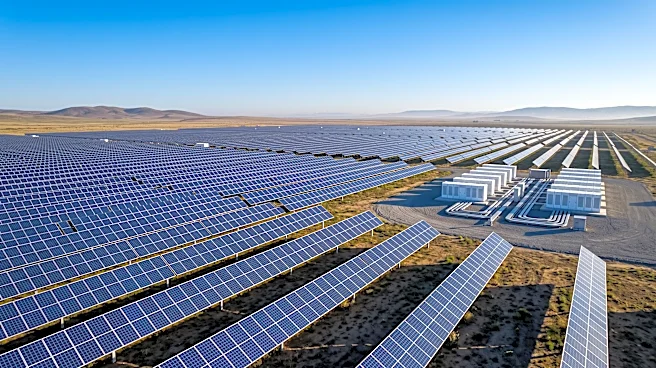
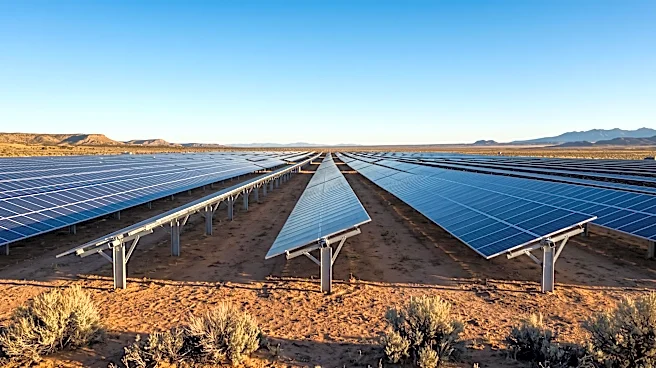
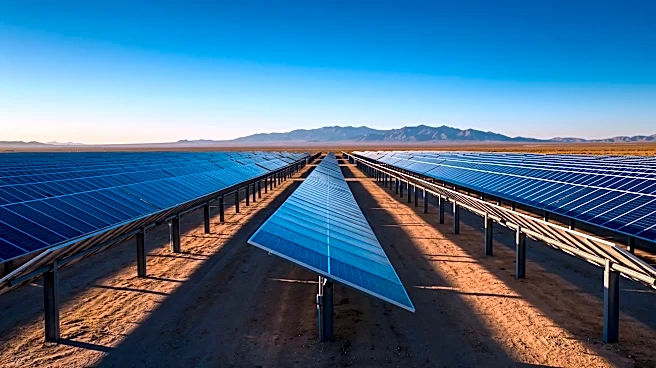
Texas. Viamontes, 42, brings over 20 years of experience in the utility industry. Tomblin's departure comes six years after she took the helm following the acquisition of EPE by J.P. Morgan-owned Infrastructure Investments Fund in a $4.3 billion deal, which took the utility private. Under Tomblin's leadership, EPE has embarked on significant infrastructure investments, including new solar farms, transmission projects, and the construction of the Newman 6 natural gas power station. The utility also set ambitious goals to achieve 80% carbon-free electricity by 2035 and net-zero carbon emissions by 2045. Viamontes will inherit these ongoing projects and the challenge of balancing system-wide investments with customer affordability, especially as hotter temperatures in El Paso have led to increased electricity costs.
Why It's Important?
This leadership transition at El Paso Electric is significant for the energy sector in the U.S. Southwest, particularly concerning the balance between infrastructure development, renewable energy integration, and consumer costs. El Paso Electric is undertaking a multi-billion dollar transformation, including substantial investments in solar energy and transmission lines, which are critical for modernizing the grid and meeting growing demand. The appointment of Eliecer Viamontes, with his background in managing a utility focused on industrial operations, suggests a potential shift in strategic emphasis or a continuation of aggressive growth and infrastructure build-out. The challenge of maintaining affordable electricity rates while investing heavily in new infrastructure is a common dilemma for utilities nationwide. This transition will test how quickly a regional utility can adapt to evolving energy demands and environmental goals without unduly burdening customers, setting a precedent for other utilities facing similar pressures.
What's Next?
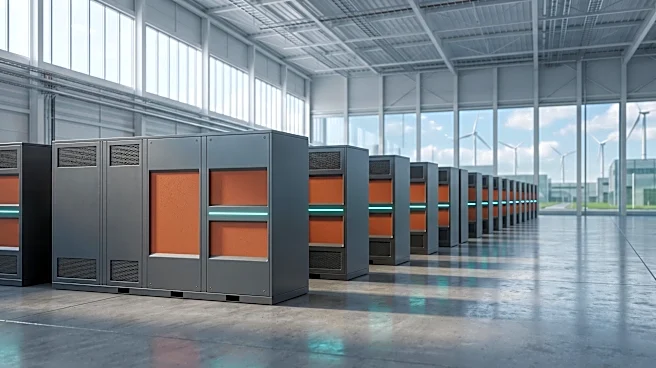
Eliecer Viamontes will officially assume his role as CEO of El Paso Electric on November 9. His immediate focus will be on delivering reliable power and making necessary investments to support the region's growth, while also addressing concerns over customer electricity costs. The utility is currently pursuing several major projects, including an additional 400 megawatts of solar generation, 500 megawatts of battery-storage capacity, and regulatory approval for the $500 million McCloud natural gas plant to power Meta's data center. EPE also plans to build high-voltage transmission lines across eastern and northeastern El Paso County to accommodate residential and industrial development. Viamontes will need to navigate these ambitious projects while potentially implementing wider time-of-use rates, which charge more for electricity during peak afternoon hours, to manage demand. Stakeholders, including customers, regulators, and environmental groups, will closely monitor how Viamontes balances these competing priorities.
Beyond the Headlines
The leadership change at El Paso Electric highlights broader trends in the U.S. utility industry, particularly the tension between rapid infrastructure expansion, the transition to renewable energy, and the imperative of energy affordability. The utility's aggressive carbon-free and net-zero emissions targets reflect a growing national push towards decarbonization, but the associated costs often translate into higher bills for consumers. The challenge for EPE, and by extension, for the broader energy sector, is to innovate in a way that supports environmental goals without creating economic hardship for households and businesses. The implementation of time-of-use rates, while designed to manage demand, also raises questions about equitable access to energy, especially for low-income communities. This situation underscores the complex interplay of technological advancement, economic policy, and social equity in the evolving landscape of U.S. energy provision.