





What's Happening?
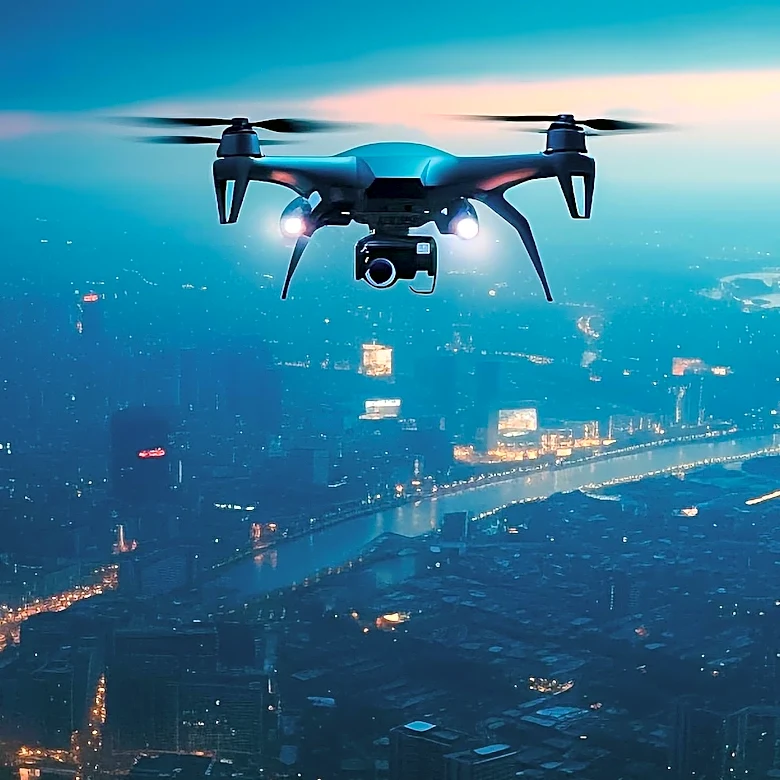
Zipline, a drone delivery company, recently secured $1.5 billion in funding, bringing its valuation to $21.5 billion. This significant financial milestone follows a period two years ago when the company reportedly 'almost died' due to challenges in launching
its next-generation technology, the Platform 2. According to co-founder and CEO Keller Rinaudo Cliffton, investors initially deemed the company 'uninvestable' for a decade. Zipline began its operations in smaller countries, focusing on critical use cases like medical deliveries where timely service could save lives. Rwanda's President Paul Kagame launched Zipline's first aircraft in October 2016. The company spent eight years building its network across Africa before launching at scale in the United States last year, with its first U.S. medical deliveries in North Carolina in 2020 and commercial orders for Walmart in Arkansas in November 2021. Zipline has since grown its flight volume significantly, making over a million deliveries annually per metro, with Walmart signing for 300 more supercenters.
Why It's Important?
Zipline's success and substantial valuation highlight the growing potential and investor confidence in the drone delivery sector, particularly for logistics and last-mile delivery solutions in the U.S. The company's focus on 'silent and safe' delivery, contrasting with competitors, could set a new standard for urban and suburban drone operations, influencing regulatory frameworks and public acceptance. For U.S. businesses, particularly in retail and healthcare, Zipline's expansion offers a transformative solution for supply chain efficiency, potentially reducing delivery times and costs. The partnership with Walmart signifies a major shift in how large retailers approach logistics, indicating a broader adoption of drone technology across the U.S. The company's journey from near-collapse to a multi-billion-dollar valuation also underscores the high-risk, high-reward nature of innovative tech ventures and the importance of perseverance in overcoming technological and financial hurdles. This development could spur further investment and innovation in autonomous delivery systems, creating new jobs and economic opportunities.
What's Next?
Zipline is expected to continue its rapid expansion in the U.S., particularly with the additional 300 Walmart supercenters slated for integration into its delivery network. This expansion will likely involve navigating complex regulatory landscapes and securing approvals for drone operations in various jurisdictions. The company's emphasis on safety and quiet operation will be crucial in gaining public trust and facilitating broader adoption. Competitors in the drone delivery space will likely intensify their efforts to match Zipline's technological advancements and operational scale, potentially leading to increased innovation and competition. The success of Zipline could also encourage other industries to explore drone-based solutions for their logistical needs, further diversifying the applications of this technology. The ongoing development of drone infrastructure and air traffic management systems will be critical to support this growth, requiring collaboration between private companies and government agencies.
Beyond the Headlines
Zipline's trajectory illustrates a significant shift in how essential goods and services can be delivered, particularly in challenging or underserved areas. Its initial focus on medical deliveries in Africa, where infrastructure might be limited, demonstrates the technology's potential for social impact beyond commercial gains. The company's commitment to 'silent and safe' operations also touches upon broader societal concerns regarding noise pollution and privacy in an increasingly drone-filled sky. This development could spark discussions about the ethical implications of autonomous delivery, the future of human labor in logistics, and the equitable distribution of technological benefits. The success of Zipline could also influence urban planning and infrastructure development, as cities adapt to accommodate drone delivery hubs and flight paths. Ultimately, Zipline's story is not just about a company's financial success but also about the evolving relationship between technology, commerce, and society.