







What's Happening?
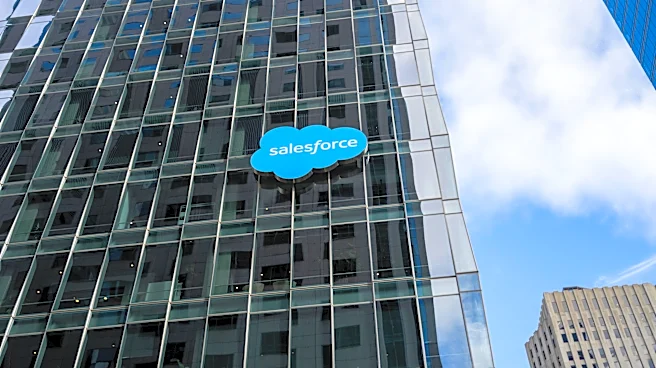
Salesforce has commenced another round of job cuts, as indicated by internal employee communications reviewed by Business Insider. The exact scope and departments affected by these latest reductions remain unclear, though employees have discussed the layoffs
on internal Slack channels, with some reporting recent dismissals, including managers. This follows earlier workforce reductions in 2026, which saw 86 positions eliminated in California across sales, general administration, and technology and product roles, along with cuts in Washington state and internationally. The company is also implementing AI spending budgets for employees, following reports of significant spending on AI tokens in the previous quarter. These actions occur as Salesforce navigates investor scrutiny regarding the potential impact of AI on traditional software business models, a concern that CEO Marc Benioff has publicly downplayed, stating, 'This is not the SaaSpocalypse.' Salesforce's stock experienced a 9% decline on Tuesday amidst these developments.
Why It's Important?
These job cuts at Salesforce signal a broader trend within the technology sector as companies adapt to evolving market dynamics and the increasing integration of artificial intelligence. For Salesforce, the reductions could be part of a strategic realignment to optimize operations and resources, potentially shifting focus towards AI-driven solutions. The move may also reflect efforts to manage costs and improve efficiency in response to investor pressures and a turbulent market. The introduction of AI spending budgets suggests a more structured approach to AI adoption within the company, aiming to control expenditures while still leveraging AI capabilities. This could impact employee roles and skill requirements, emphasizing the need for AI proficiency. The market's reaction, evidenced by the stock decline, indicates investor apprehension about the company's future growth trajectory and its ability to successfully navigate the AI transition without significant disruption to its core business model.
What's Next?
Salesforce is expected to continue its strategic adjustments as it integrates AI more deeply into its product offerings and internal operations. Further details regarding the scope and rationale behind the recent job cuts may emerge, potentially clarifying the company's long-term workforce strategy. The implementation of AI spending budgets will likely lead to more disciplined AI adoption across departments, potentially influencing how employees utilize AI tools and resources. Investors will closely monitor Salesforce's upcoming earnings reports for insights into the financial impact of these changes, particularly how AI initiatives contribute to revenue growth and profitability. The company's ability to demonstrate successful AI integration while maintaining its market position will be crucial. Competitors will also be observing Salesforce's moves, potentially influencing their own strategies regarding AI adoption and workforce management in the enterprise software sector.
Beyond the Headlines
The ongoing workforce reductions at Salesforce, coupled with its aggressive push into AI, highlight a significant transformation within the enterprise software industry. This shift raises questions about the future of work, as AI automation potentially reshapes job functions and demands new skill sets from employees. The company's efforts to control AI spending also underscore the financial complexities and investment required to effectively integrate advanced AI technologies. Ethically, these layoffs prompt discussions about corporate responsibility during technological transitions and the support provided to affected employees. Legally, companies like Salesforce must navigate evolving labor laws and regulations related to mass layoffs. Culturally, the emphasis on AI could foster a more data-driven and automated work environment, potentially altering internal dynamics and employee engagement. This period represents a critical juncture for Salesforce, as its strategic decisions will likely influence its long-term competitiveness and its role in shaping the future of enterprise AI.