
What's Happening?
Starbucks Corporation is reportedly exploring a potential sale of its Japan business, a venture that could be valued at several billion dollars. The U.S. coffee chain has engaged advisers, including Citigroup
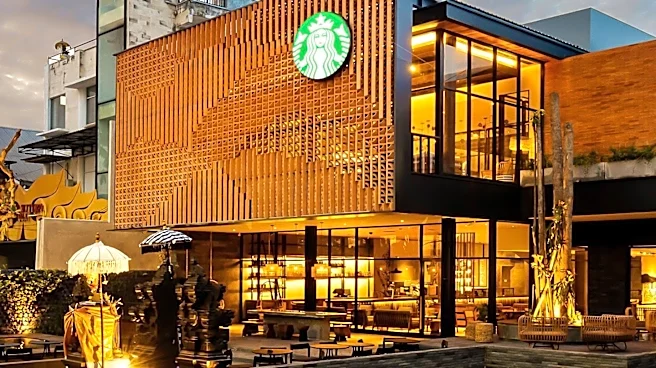
and Morgan Stanley, to gauge interest from both strategic and financial investors. According to Bloomberg News, citing individuals familiar with the matter, a formal sale process could commence as early as this year. However, discussions are ongoing, and there is no guarantee that a transaction will materialize. Starbucks has a significant presence in Japan, operating approximately 2,000 coffeehouses, making it one of the company's largest international markets. The brand has been established in Japan for over three decades, indicating a long-standing and substantial operation.
Why It's Important?
The potential sale of Starbucks' Japan business signifies a strategic shift in the company's international operations. This move follows previous efforts by Starbucks to restructure its global footprint, including a deal to sell control of its China business to local investors. Divesting a major market like Japan could allow Starbucks to reallocate resources, streamline its international portfolio, or focus on other growth areas. For the U.S. company, such a sale could generate substantial capital, which could be used for debt reduction, share buybacks, or investments in other strategic initiatives. The involvement of major financial advisers like Citigroup and Morgan Stanley suggests a serious consideration of this divestiture. The outcome will be closely watched by investors and competitors, as it could set a precedent for how large multinational corporations manage their extensive global operations in an evolving market landscape.
What's Next?
Starbucks is expected to continue discussions with potential strategic and financial investors regarding its Japan business. The engagement of Citigroup and Morgan Stanley indicates a structured approach to exploring this sale, which may involve detailed financial assessments and market analyses. If the company decides to proceed, a formal sale process would likely be initiated, inviting bids from interested parties. This could lead to negotiations with various entities, potentially culminating in a definitive agreement. However, the report also notes that discussions are ongoing and may not result in a transaction, meaning Starbucks could ultimately decide against selling its Japan operations. The company's future announcements regarding its international strategy will provide further clarity on the direction it intends to take with its Japanese assets.
Beyond the Headlines
Beyond the immediate financial implications, the potential sale of Starbucks' Japan business reflects broader trends in global retail and brand management. It highlights how even well-established international brands may continually reassess their market presence and operational models to optimize performance and adapt to local market dynamics. Such a divestiture could indicate a strategic pivot towards a more asset-light model in certain regions or a greater emphasis on franchising or licensing agreements rather than direct ownership. For the Japanese market, a change in ownership could lead to shifts in operational strategies, menu offerings, or expansion plans for Starbucks stores, depending on the new owner's vision. This move also underscores the increasing complexity for multinational corporations in balancing global brand consistency with local market responsiveness and profitability, potentially signaling a new era of strategic divestments for mature international operations.