





What's Happening?
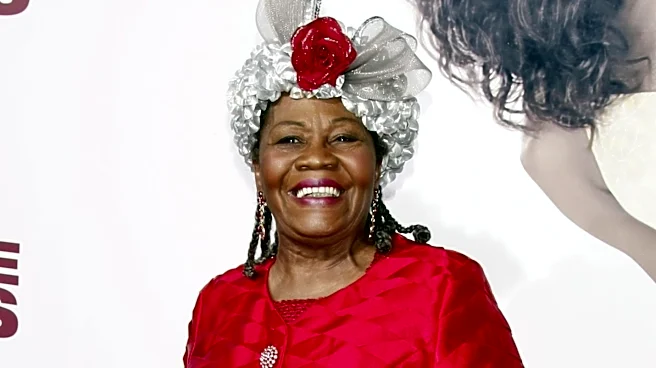
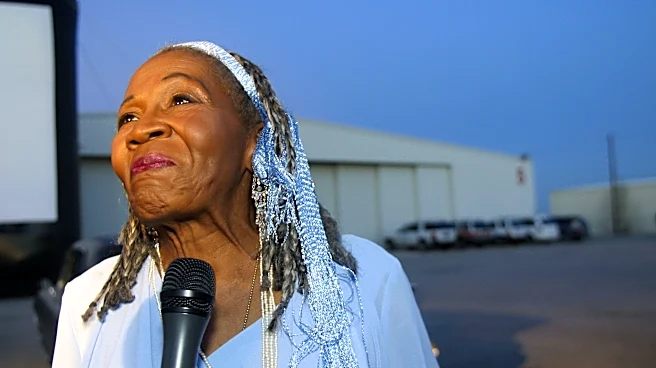
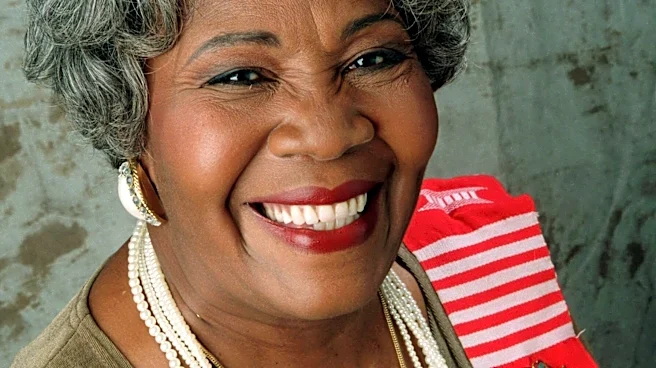
Irma P. Hall, the acclaimed actress known for her role as Big Mama Joseph in the 1997 film 'Soul Food,' passed away on Tuesday in Dallas at the age of 91. Her family confirmed her death in a statement, indicating she was surrounded by loved ones. The
cause of death has not been disclosed. Hall's family described her as a 'beloved actress, author, poet, educator, and public speaker' whose contributions significantly impacted many lives throughout her career. Before her acting career took off, Hall dedicated nearly three decades to working as a schoolteacher in Dallas. She achieved her breakthrough in acting at the age of 60, a point when many performers consider retirement. Beyond 'Soul Food,' Hall also had notable roles as Minerva in Clint Eastwood’s 'Midnight in the Garden of Good and Evil' and alongside Tom Hanks in 'The Ladykillers.' Her filmography also includes 'A Family Thing' and an appearance in the series 'Hap and Leonard.'
Why It's Important?
Irma P. Hall's passing marks the loss of a significant figure in American cinema, particularly within Black cinema, where her portrayal of Big Mama Joseph became an iconic and cherished character. Her role in 'Soul Food' resonated deeply with audiences, establishing her as a matriarchal figure whose Sunday dinners symbolized family unity and cultural heritage. This character's enduring legacy highlights the importance of authentic representation and storytelling in film, influencing generations of viewers who saw their own family dynamics reflected on screen. Hall's late-career success also serves as an inspiration, demonstrating that talent and opportunity can emerge at any age, challenging conventional timelines in the entertainment industry. Her contributions as an educator, author, and poet further underscore her multifaceted impact beyond acting, reflecting a life dedicated to enriching her community and the arts.
What's Next?
The entertainment industry and fans will likely continue to celebrate Irma P. Hall's legacy through tributes and retrospectives of her work. Her films, particularly 'Soul Food,' are expected to be revisited by audiences and critics, reinforcing her impact on cinematic history. Discussions may arise regarding the importance of her roles in shaping narratives about Black families and culture in mainstream media. Her passing could also prompt renewed interest in her broader contributions as an author, poet, and educator, potentially leading to further recognition of her diverse talents. Memorials or special screenings of her notable works might be organized to honor her memory and contributions to film and society. Her family's statement emphasized her wide-ranging influence, suggesting that her impact will be remembered across various fields she touched.
Beyond the Headlines
Irma P. Hall's career trajectory, beginning her significant acting career at 60 after decades as a schoolteacher, offers a powerful narrative about second acts and the enduring power of talent. This late-blooming success challenges ageism within the entertainment industry and highlights the value of life experience in character portrayal. Her iconic role as Big Mama in 'Soul Food' transcended mere acting; it became a cultural touchstone, embodying the strength, wisdom, and love often found in matriarchal figures within African American families. This portrayal contributed significantly to the cultural fabric of American cinema, offering a nuanced and relatable depiction of family dynamics that resonated across diverse audiences. Her work also subtly underscored the importance of community and tradition, themes that remain deeply relevant in contemporary society. Hall's life story, from educator to celebrated actress, exemplifies a profound dedication to enriching lives, whether in the classroom or on screen.