




What's Happening?
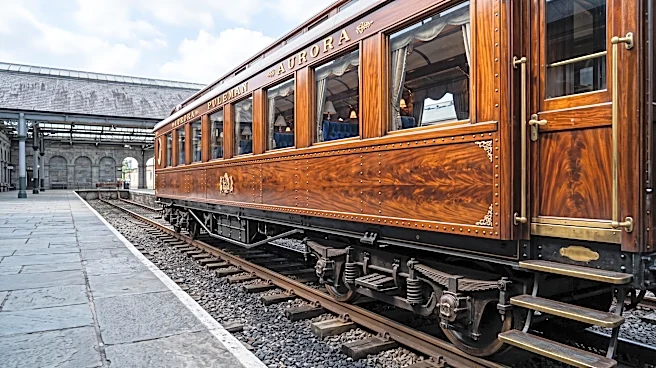
George M. Pullman, the visionary behind the Pullman Palace Car Company and the concept of luxury railway travel, passed away in Chicago on October 19, 1897, at the age of 66. Born in Brocton, New York, in 1831, Pullman revolutionized train travel by introducing
the 'palace car' sleeping coach. He founded the Pullman Palace Car Company, serving as its president from its inception until his death. His entrepreneurial spirit led him to Chicago in 1859 with $6,000, where he initially engaged in raising buildings. His company's capital was reported to be between $30,000,000 and $40,000,000 during his lifetime. Pullman was also known for establishing the company town of Pullman, Illinois, south of Chicago, where shops opened in April 1881. The town, which housed his employees, became a point of contention during the 1894 Pullman Strike, a significant labor dispute in U.S. history.
Why It's Important?
George M. Pullman's contributions significantly shaped the development of American railroads and industrial practices. His 'palace cars' transformed long-distance train travel, making it more comfortable and luxurious, which in turn boosted the appeal and expansion of the railway system across the United States. The Pullman Palace Car Company became the world's largest railroad-car manufacturer, operating on approximately 125,000 miles of railroad, covering about three-fourths of the country's mileage. However, his legacy is also intertwined with the controversial company town of Pullman. While intended to be a model industrial community, the town's strict control over its residents and the company's refusal to lower rents during wage cuts led to the historic 1894 Pullman Strike. This event highlighted the growing tensions between labor and capital in the late 19th century, influencing future labor relations and the role of corporations in employee welfare. The strike, which saw the American Railway Union stop handling Pullman cars, resulted in significant financial losses for both employees and railroads, underscoring the profound economic and social impact of Pullman's business model.
What's Next?
Following George M. Pullman's death, Robert T. Lincoln succeeded him as president of the Pullman Palace Car Company, a position he held until 1911. The company's vast assets, including 23,919 shares of its stock, were detailed in an inventory filed in Chicago probate court. The company's influence on the railroad industry was expected to continue, albeit under new leadership. The legacy of the Pullman Strike, however, would persist, influencing labor movements and discussions around corporate responsibility and employee rights for years to come. The strike had already prompted the United States Strike Commission to investigate the causes and impacts, providing valuable insights into industrial relations. Future developments in labor law and corporate governance would likely be shaped by the precedents set during Pullman's era, particularly concerning the balance of power between employers and employees in large industrial enterprises.
Beyond the Headlines
The life and death of George M. Pullman extend beyond his immediate business achievements to touch upon deeper societal and ethical implications. His creation of the company town of Pullman, while innovative in its design and amenities, also represented a paternalistic approach to industrial management. The company's control over housing, utilities, and even social life within the town raised questions about individual autonomy and the extent of corporate power. The 1894 strike, triggered by wage cuts without corresponding rent reductions, exposed the vulnerabilities of workers in such a system and ignited a national debate on fair labor practices. This event contributed to the broader Progressive Era's focus on social justice and economic reform. Pullman's story serves as a historical case study illustrating the complex interplay between industrial growth, technological innovation, labor rights, and the evolving social contract between employers and employees in a rapidly industrializing America. His impact on the physical landscape of American travel and the philosophical landscape of American labor relations remains significant.