







What's Happening?
India is implementing significant changes to its solar sourcing regulations, particularly through the expansion of the Approved List of Models and Manufacturers (ALMM) framework. These changes mandate increased domestic manufacturing requirements for
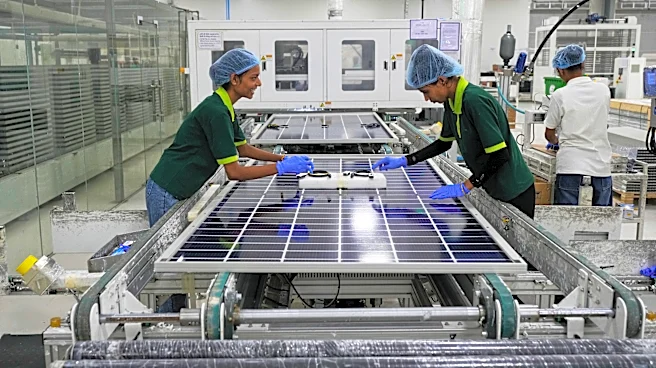
solar components, moving away from previously attractive non-Domestic Content Requirement (DCR) solar panels. Historically, non-DCR panels, which often used imported cells or components, offered competitive pricing for commercial and industrial projects. However, the new policy direction aims to foster a domestic solar manufacturing ecosystem. This shift means that many industrial consumers will now be required to use DCR-compliant options for applicable projects, which generally have a higher upfront cost due to the use of domestically manufactured components. The core development is a policy-driven move to prioritize local production within India's solar energy sector.
Why It's Important?
This regulatory shift is important for several reasons, primarily impacting the economics and supply chain of industrial solar projects in India. While the upfront capital expenditure for solar installations may increase due to the higher cost of DCR-compliant panels, the long-term profitability of industrial solar plants can still be maintained through intelligent project structuring. This includes optimizing solar power generation during the day and utilizing permitted grid mechanisms to offset consumption at other times. The policy aims to strengthen India's domestic manufacturing capabilities, creating jobs and reducing reliance on foreign imports for critical renewable energy infrastructure. For industrial consumers, the decision to invest in solar will increasingly depend on a comprehensive economic analysis that goes beyond just the panel purchase price, considering factors like energy banking, wheeling, and open-access settlement mechanisms.
What's Next?
The immediate consequence of these changes will be a re-evaluation of project economics by industrial consumers and solar developers in India. Companies planning new solar power plants will need to adapt their sourcing strategies to comply with the expanded ALMM framework and DCR requirements. This could lead to increased demand for domestically manufactured solar components and potentially stimulate further investment in India's solar manufacturing sector. Developers will likely focus on innovative project designs and financial models to ensure a strong return on investment despite higher initial costs. The long-term outlook suggests a more self-reliant Indian solar industry, though the transition period may present challenges for projects accustomed to cheaper imported components.
Beyond the Headlines
Beyond the immediate economic and supply chain implications, this policy reflects a broader strategic move by India to enhance its energy security and industrial self-sufficiency. By promoting domestic manufacturing, India aims to reduce its vulnerability to global supply chain disruptions and price fluctuations for solar components. This initiative also aligns with national goals of job creation and technological advancement within the renewable energy sector. The emphasis on DCR could foster innovation in domestic solar technology and manufacturing processes, potentially leading to the development of more cost-effective and efficient indigenous solutions in the future. It also highlights a global trend where nations are increasingly looking to localize critical industries, especially those vital for energy transition.