






What's Happening?
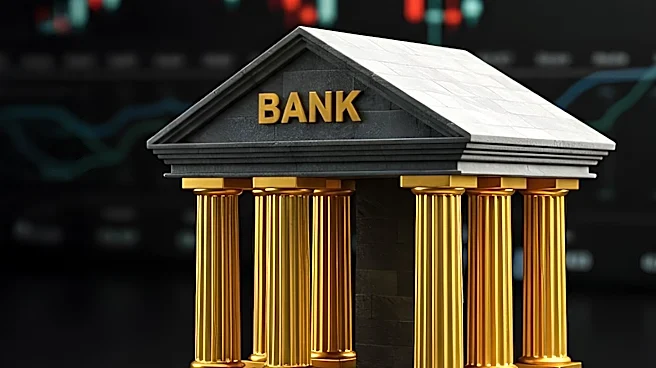
Despite reporting strong earnings and experiencing a favorable credit environment, U.S. banks are facing a cautious outlook for 2027. Major institutions like JPMorgan Chase & Co., Bank of America Corp., and Citigroup Inc. have cited macroeconomic volatility
and political uncertainty as key concerns. While current profits are up, doubts are emerging regarding the returns from tens of billions of dollars invested in data center financing, particularly if AI investments do not meet expected returns. A year ago, data center spending was viewed as a growth opportunity, but it is now increasingly seen as a potential risk. Additionally, concerns about exposure to private credit and the prospect of further interest rate hikes are contributing to this cautious sentiment.
Why It's Important?
The cautious outlook from U.S. banks is significant for the broader economy, as the banking sector's health is a key indicator of financial stability. Concerns over data center financing highlight potential vulnerabilities within the rapidly expanding AI infrastructure market, suggesting that the anticipated returns from these investments may be overhyped or delayed. This could lead to tighter lending standards for technology companies and data center developers, potentially slowing innovation and growth in the AI sector. Furthermore, increased exposure to private credit could pose systemic risks if economic conditions deteriorate, impacting businesses and consumers reliant on such financing. The banks' outlook also influences investor confidence, potentially leading to market volatility and re-evaluation of investment strategies in both the financial and technology sectors.
What's Next?
In 2027, banks anticipate a more challenging environment with normalizing revenue growth and rising risks associated with certain debt types. Potential cracks in credit quality, particularly concerning data center financing and private credit, are expected to emerge. Banks will likely increase their scrutiny of these investments and may adjust their lending practices accordingly. Regulators may also intensify their oversight of banks' exposure to these areas. The industry will closely monitor economic indicators, interest rate policies, and the actual returns generated from AI-related data center investments to reassess risk profiles and strategic directions. This could lead to a more conservative approach to lending and investment in high-growth, high-risk sectors.
Beyond the Headlines
The evolving perception of data center financing from a growth opportunity to a potential risk reflects a broader re-evaluation of the AI boom's economic realities. This shift could signal a maturing phase for AI infrastructure investment, where initial exuberance gives way to more rigorous financial scrutiny. Ethically, it raises questions about responsible investment in emerging technologies and the potential for speculative bubbles. Legally, it might prompt new regulatory frameworks for financing large-scale tech infrastructure projects. Culturally, it underscores the ongoing tension between rapid technological advancement and the need for sustainable economic models, highlighting the interconnectedness of finance, technology, and broader societal well-being.